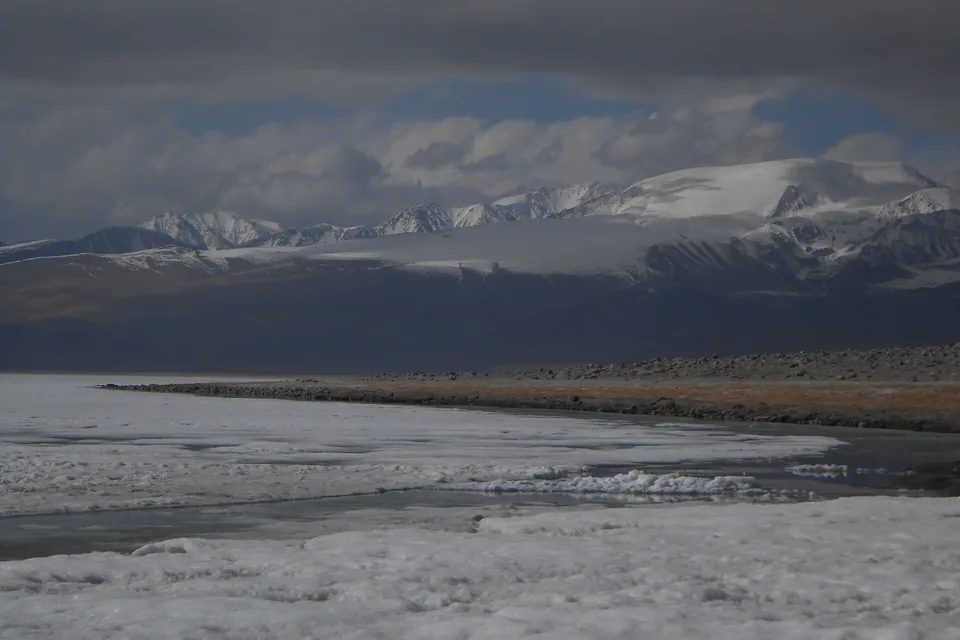
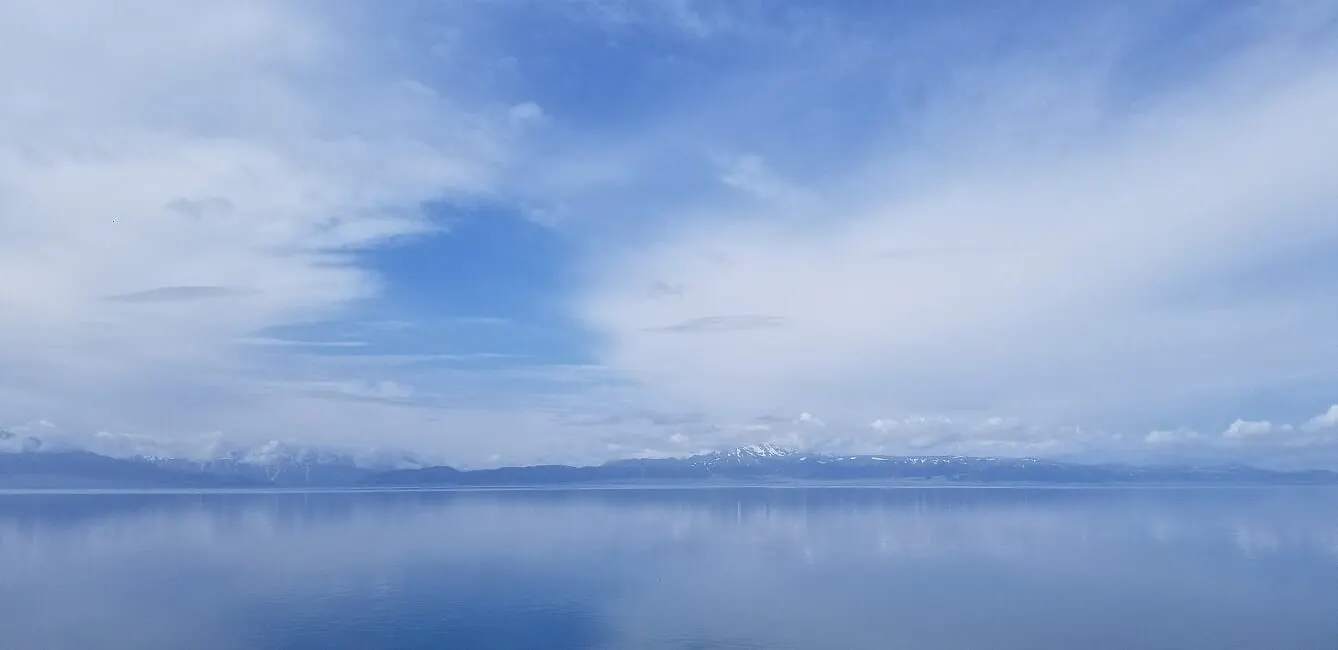
The ice push is Sayram Lake in winter: wind drives broken ice onto the shore until it stacks like a wall of shattered glass against the snow peaks. This covers how it forms, roughly when it appears, which shore shoots best, and what never to do.
Destination: Xinjiang
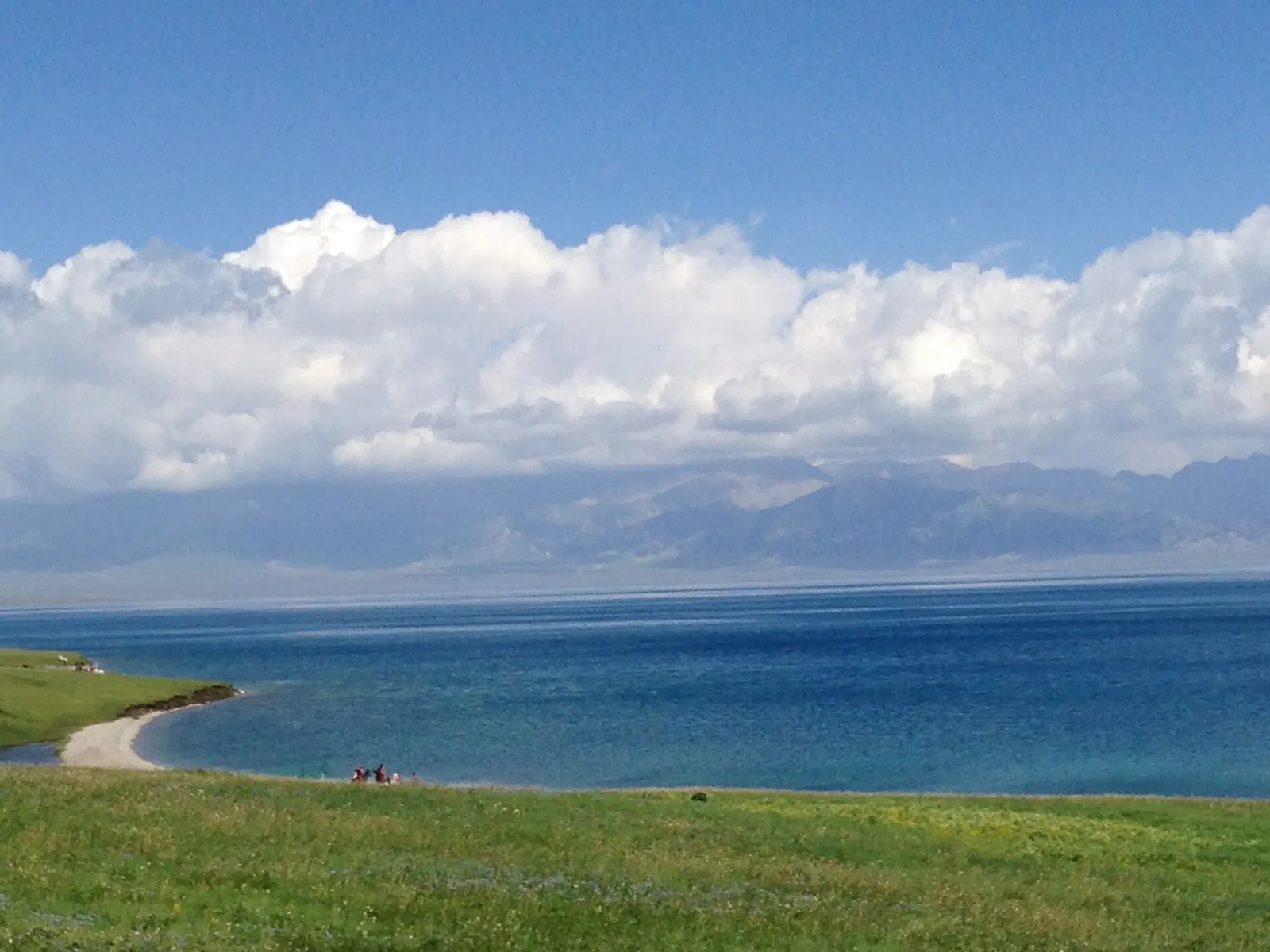
Everyone photographs Sayram in summer, when the lake is an impossible blue against grassland. Winter is a different face: the surface freezes, wind pushes broken plates into a wall on the shore, colour running from white to pale blue, edges like broken glass. That is the ice push.
This article covers only the ice push: how it forms, roughly when to meet it, where to shoot, and what never to do. For the wider winter plan in Yili seewinter in Yili。
How the ice push forms
Sustained cold builds an ice sheet. The sheet is not one solid plate: wind and current crack it, broken pieces drift downwind and are driven against the windward shore. Ice behind keeps pushing, ice in front is shoved onto land, layer over layer, until that jagged wall appears.
So whether you see it depends on three things: how cold the year is, how thick the ice gets, how hard the wind blows. It also means the location changes yearly: piled on the north shore this year, on the east next. Any guide claiming one fixed spot deserves scepticism.
When to go
In most years the window runs from late December into February. Once the lake is fully frozen, any wind builds new piles; during breakup, late March into April, the sheet fragments and similar stacks appear, thinner and more broken.
But "which month" only gives a range. Which week shows a real ice push depends on that year temperature curve and wind direction, and asking locally works best: ask someone who went last week, or a driver working the lakeside road, rather than trusting a blog.
For light, sunrise is best. The low sun angle lets the cut faces of ice glow pale blue and keeps snow from blowing out. Shooting the push in flat midday light gives a white void with no layering.
Getting to the lake
From Yining: about two hours by road, the most common approach, doable as a day trip or with a night by the lake for sunrise.
From Bole: the other side of the circuit, useful for linking Sayram with Guozigou.
Self-drive or hired car: parts of the lakeside road are temporarily restricted in snow, and self-driving needs four-wheel drive, winter tyres and snow experience. A hired car with driver is better value in winter, especially for a pre-dawn start to catch sunrise.
The lake sits above 2,000 m and the wind is harder than in town. Felt temperature often runs ten degrees below the thermometer, so a hat and windproof shell are essential.
Positions and technique
On arrival, drive a stretch of the lakeside road and see which shore has accumulation. The push moves each year, so judging on site beats picking a pin in advance.
Once you find a pile, three angles are worth trying: low and close to the ice for the layering; step back and use a person or the shoreline for scale so the wall reads taller; put the snow peaks behind and compress with a telephoto so ice, lake and mountain stack together.
On gear, wide angles for the scene, telephoto for layering, and a polariser to cut glare off the ice and bring out the pale blue. Batteries drain fast in cold, so keep spares against your body.
One more window is worth waiting for: the blue hour twenty minutes after sunset. The sky turns deep blue, the cut faces of ice hold a little residual light, and the image is quieter than sunrise. The cost is the coldest temperature of the day, when hands stiffen, so bring gloves with exposed fingertips.
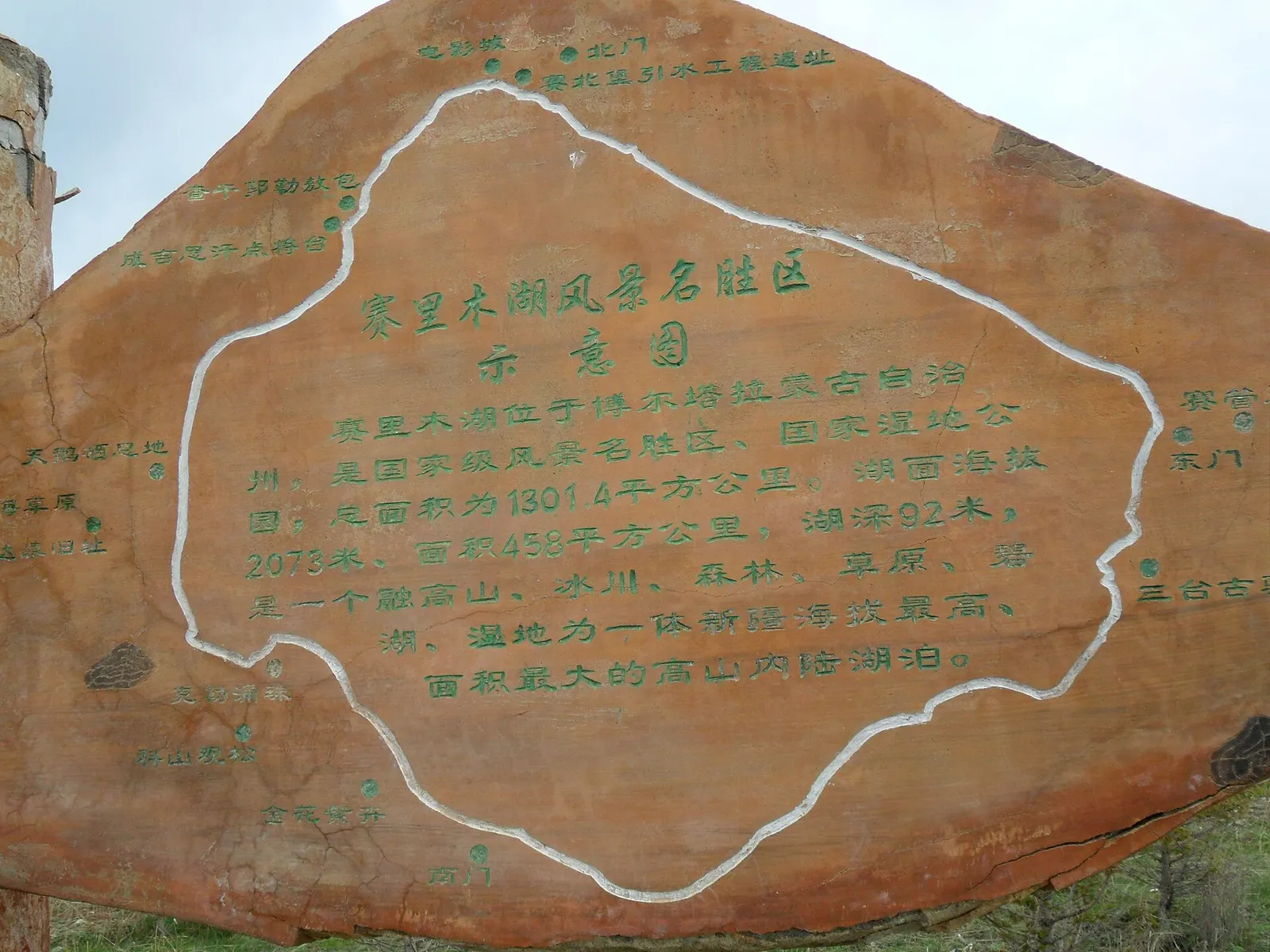
Do not frame only the ice. Include the lakeside road, distant peaks, or a figure walking away, so the scale reads. Ice alone looks like a pile of white fragments, and nothing suggests this is one of China largest alpine lakes.
Should you stay by the lake?
To shoot sunrise, stay by the lake. That is the only reason worth paying more. Few places open in winter, mostly toward the east gate and north shore, with uneven standards, so ask three things before booking: heating, whether hot water is reliable, and distance to the shore.
Staying in Yining also works: leave before dawn, about two hours of driving, and you get better rooms and easier meals. With elders or children, the second option is safer.
Above 2,000 m, nights are cold and room warmth matters more than decor. If you shoot seriously, one night by the lake gets you both sunrise and blue hour without driving in the dark.
Safety lines
Do not walk on the ice. Sayram is large and deep, ice thickness varies, and currents and cracks cannot be judged by eye; local authorities prohibit going onto the lake. The push is on the shore, so you can shoot it from land without risk.
Do not linger alone on empty stretches. Winter traffic is sparse, wind drops felt temperature quickly, and phone signal is unreliable. Tell your driver how long you will stop, and do not leave them waiting.
Watch visibility in blowing snow. Ground blizzard can cut visibility to tens of metres in minutes. When it starts, get in the vehicle and wait rather than walking on the road.
Frequently Asked Questions
Is the ice push the same as blue ice? No. The ice push is a shoreline formation of stacked broken ice. Blue ice refers to blue light inside a glacier ice mass. Sayram ice can look pale blue, but the causes differ.
Can you see it in summer? No. The lake does not freeze in summer, when the draw is blue water and grassland. The ice push is winter only.
Is there a ticket? Sayram is a ticketed scenic area, with prices and hours set by current notices and possible winter adjustments. Check official channels before you go.
Is it worth a trip just for the ice push? If you shoot landscapes and accept cold and uncertainty, yes. If you are passing through, treat it as one segment of a winter Yili itinerary and you will not be disappointed, since the ice push is inherently luck-dependent.
What else is nearby? Guozigou, Khorgos and Yining city are all within two hours; further out you can link Nalati and Qiongkushitai, covered in the Yili winter piece.