Sandstone pillars in Zhangjiajie, cliff walkways in Enshi and the hills of Chongqing, built around walking, with ticket booking, step counts, cable car choices and pacing.
Zhangjiajie and Enshi both sell mountain views, but not the same way. In Zhangjiajie you stand on top and look down at a field of pillars. In Enshi you walk along a cliff with several hundred metres of air beneath you. The first tests your legs, the second tests your knees and your nerve.
Twelve days joins the two, then takes a train into Chongqing for two days in the hill city. Walking is the main activity; cable cars and lifts are tools, not the point.
It suits people who walk regularly and can handle several days of 20,000 to 30,000 steps. Anyone with old knee injuries or an aversion to stairs will find it hard. If you want the views without the effort, take the water route instead.
Why it is hard and why it is worth it
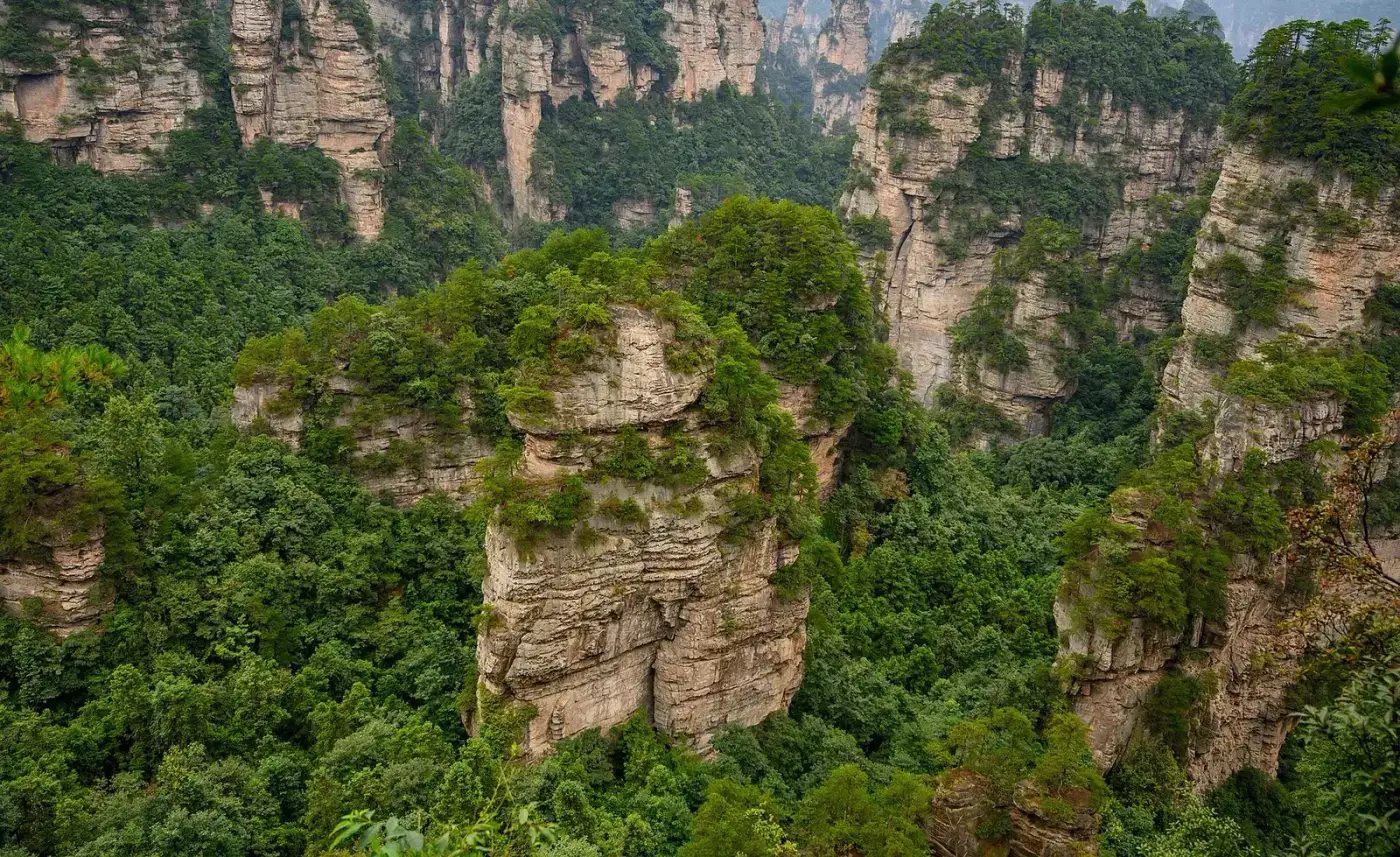
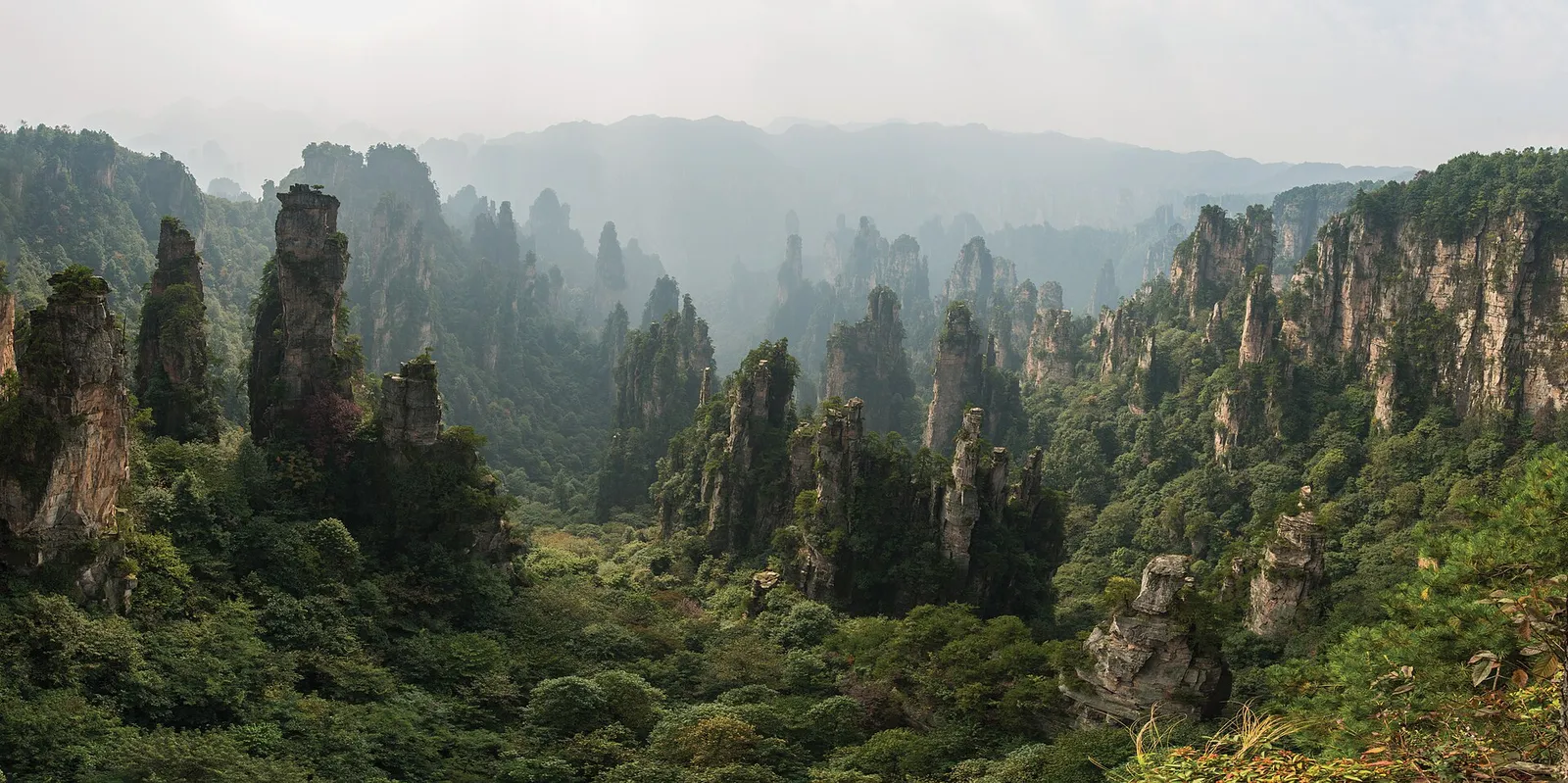
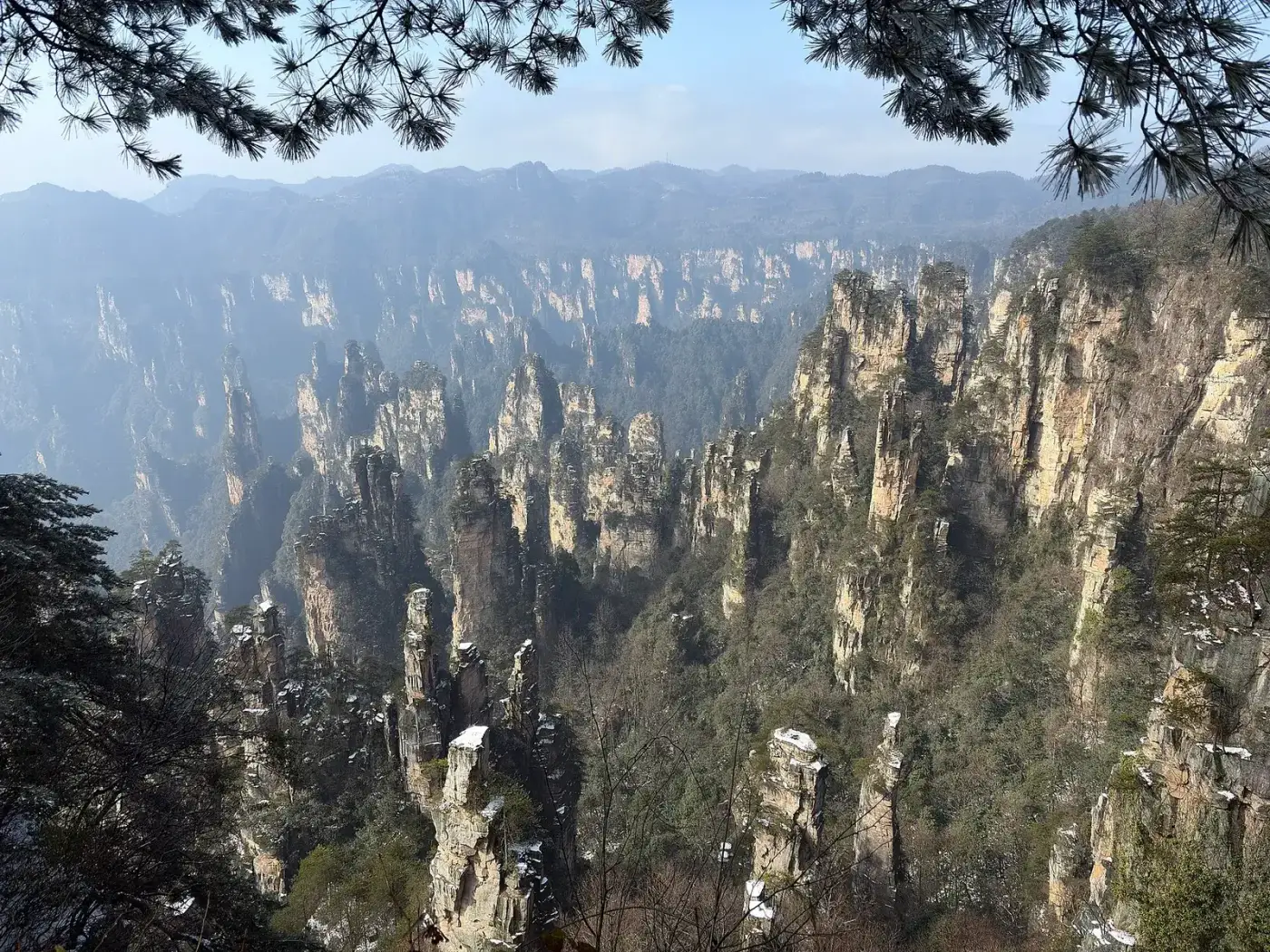
The core Zhangjiajie scenic area is one mass of quartz sandstone pillars, more than three thousand of them packed together. Shuttle buses and cable cars lift you to the ridge, and the rest is on foot, along cliff paths and ridge lines. From the Yuanjiajie viewpoints the valley floor is hundreds of metres down and the far side looks like the floating mountains in Avatar.
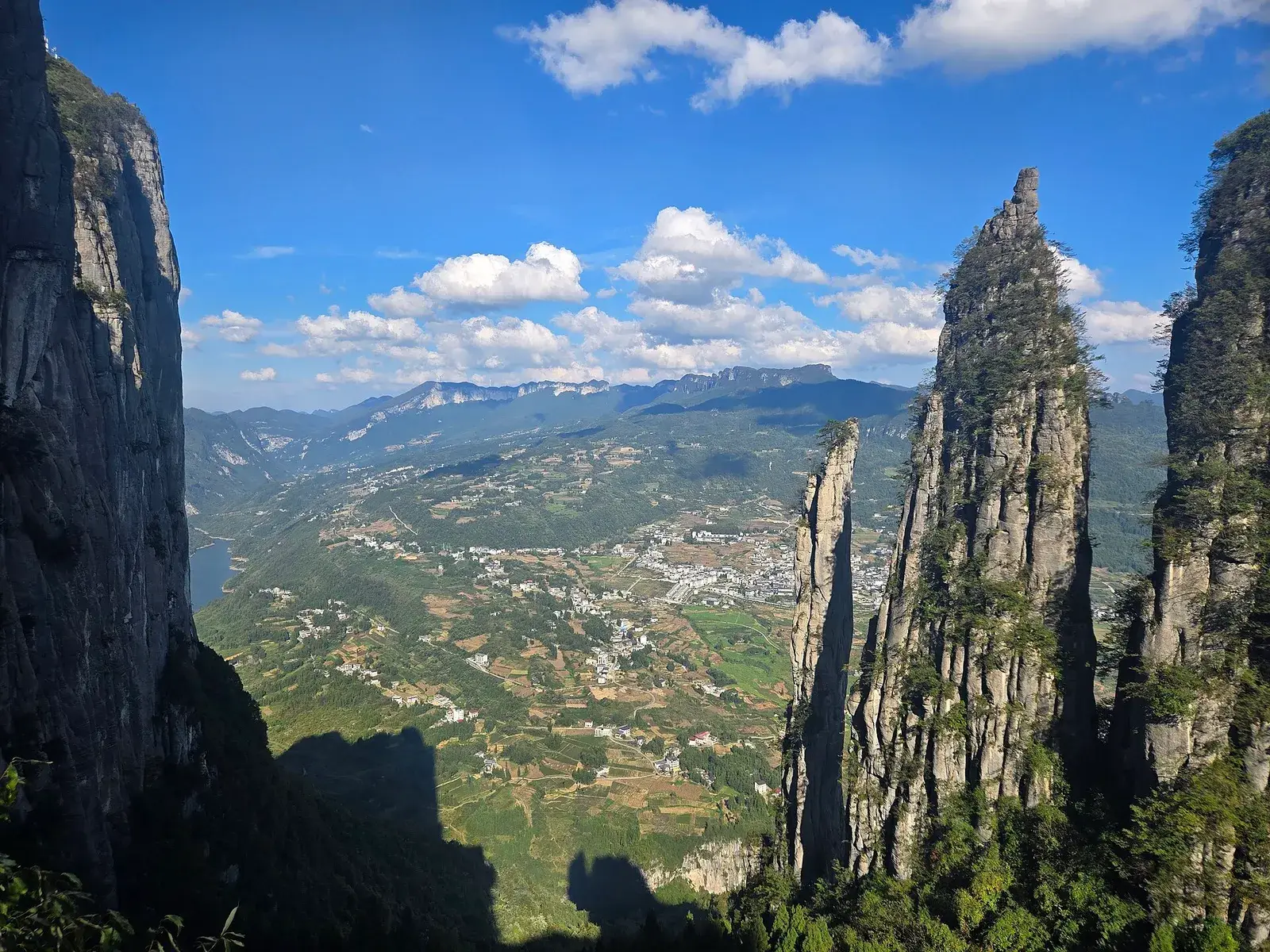
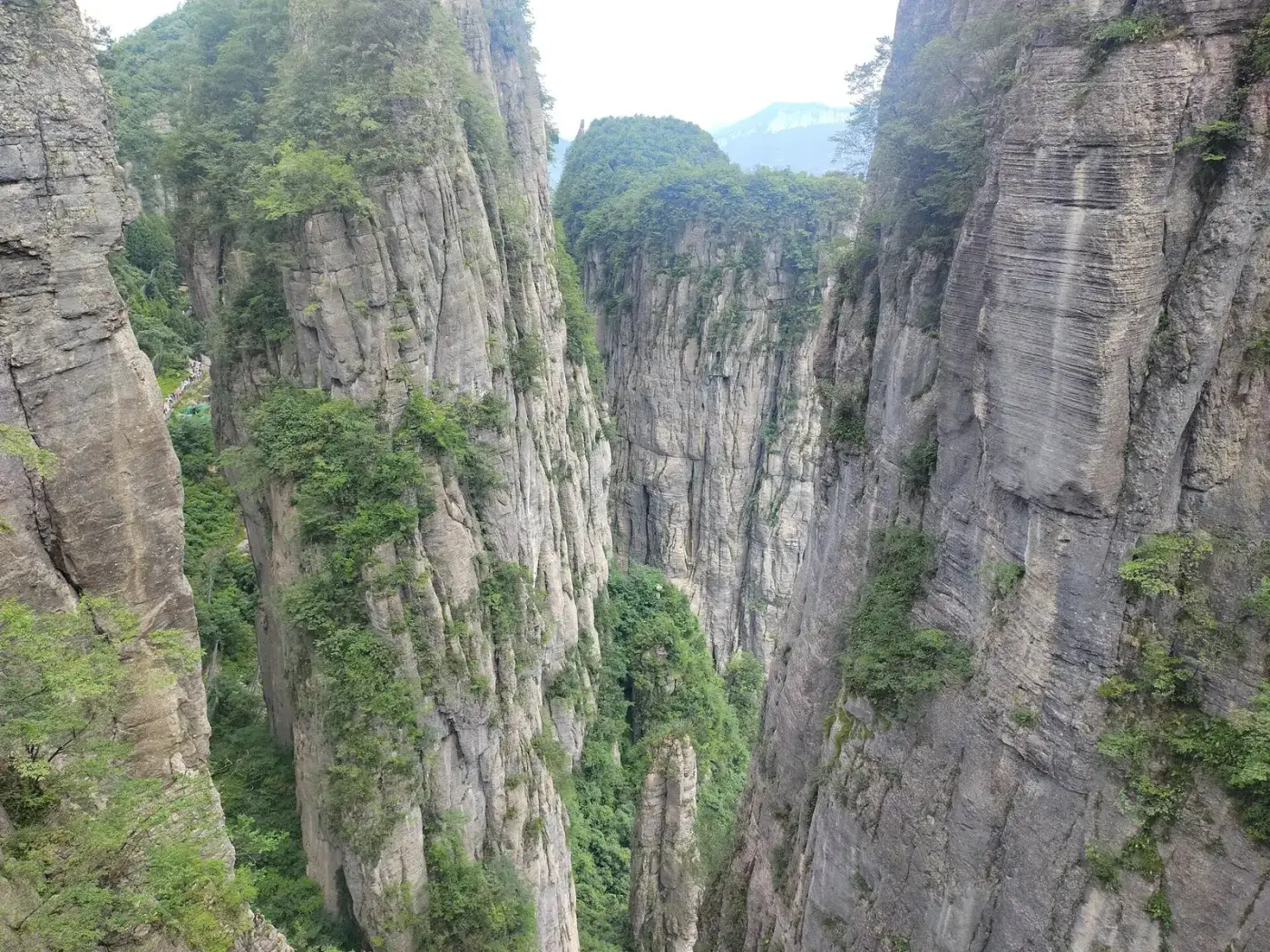
Enshi Grand Canyon works at another scale. The Qixingzhai cliff walkway is bolted to a wall 1,700 metres up, with nothing on the outside and vertical rock on the inside. It runs for more than a kilometre with nowhere to sit. Most people go quiet after it.
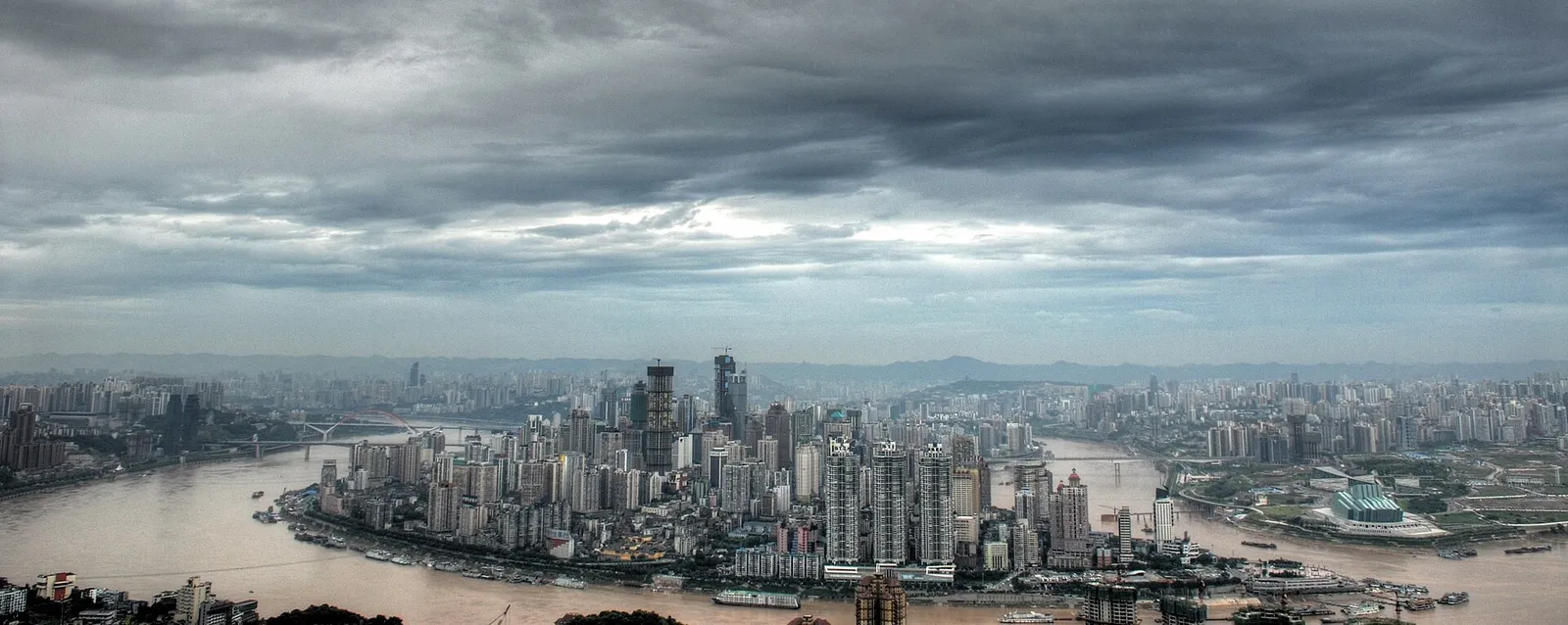
Chongqing closes the trip. Two days with no stairs: hill paths, the Yangtze cable car, night views from Nanshan. The body steps down from the load in time for the flight home.
The 12-day plan
| Day | Plan | Base |
| D1 | Guangzhou or Shenzhen to Changsha, settle in | Changsha |
| D2 | Changsha to Zhangjiajie, Jinbian Stream in the afternoon | Wulingyuan |
| D3 | Yuanjiajie and Yangjiajie | Wulingyuan |
| D4 | Tianzi Mountain and Ten-Mile Gallery | Wulingyuan |
| D5 | Zhangjiajie to Enshi, transfer day | Enshi |
| D6 | Enshi Grand Canyon, Qixingzhai | Enshi |
| D7 | Yunlong Crack, then move to Banqiao | Banqiao or Enshi |
| D8 | Luyuanping hike | Enshi |
| D9 | Enshi to Chongqing, riverside in the evening | Chongqing |
| D10 | Ordovician Park | Chongqing |
| D11 | Hill paths, Yangtze cable car, Nanshan night view | Chongqing |
| D12 | Fly home from Chongqing | — |
D5 is a transfer you cannot skip. There is no convenient direct service from Zhangjiajie to Enshi, so a private car takes three and a half to four hours over the Wuling Mountains, passing through Tujia townships.
The afternoon move to Banqiao on D7 buys a shorter drive the next morning. Rooms there are basic, but the hour saved is worth it in energy.
Getting between the three clusters
| Leg | Option | Time | Reference fare (2026) |
| Guangzhou South to Changsha South | High-speed rail | about 2.5 hours | about CNY 310 second class |
| Changsha South to Zhangjiajie West | High-speed rail | 2.5 hours | CNY 110–290 second class |
| Zhangjiajie to Enshi | Private car | 3.5 to 4 hours | CNY 1,000–1,300 per day |
| Enshi to Chongqing North | Bullet train | 2 hours or more | about CNY 150 second class |
| Chongqing city to Ordovician Park | Private car | 2.5 hours each way | CNY 800–1,000 per day |
Trains from Changsha South to Zhangjiajie West are frequent and fares swing; booked a week out they usually land near CNY 150. Zhangjiajie West is still thirty kilometres from Wulingyuan, half an hour by park shuttle or forty minutes by taxi.
Enshi’s sights are spread out, so a car is close to essential. The canyon is fifty kilometres northwest of the city and Luyuanping sits in Banqiao, in a different direction. Daily hire beats point-to-point taxis.
Two days in Zhangjiajie: enough, and how to save your legs
Enough for the three main lines. The core-area ticket costs CNY 228, valid four days including the shuttle buses, but you must reserve a timed slot in advance through the Zhangjiajie mini-program, one to seven days ahead. There is no ticket window on site.
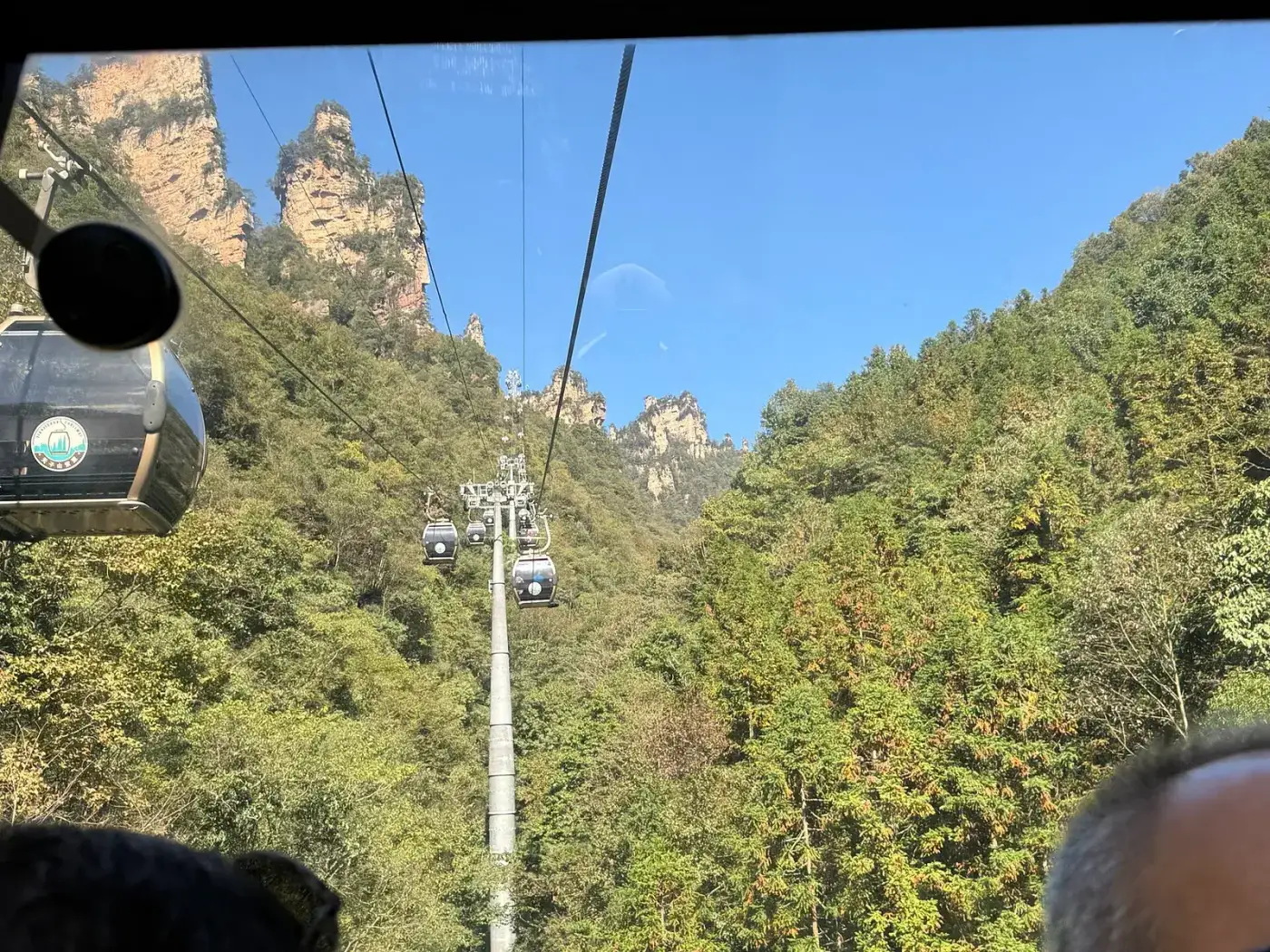
Transport up the mountain is charged separately: Bailong Lift CNY 65 one way, Tianzi cable car CNY 72, Yangjiajie cable car CNY 76, Ten-Mile Gallery train CNY 38. Whether they are worth it depends on how much leg you have left that day.
Day one: Jinbian Stream, to acclimatise
Jinbian Stream runs 7.5 kilometres on flat ground beside the water, with pillars and macaques on both sides. Two to three hours, no sweat, a good way to adjust to the humidity.
The monkeys grab things, so keep plastic bags and exposed food inside your pack. Rocks by the stream are slippery, and the waterside is not worth a photo if it costs you a fall.
Day two: Yuanjiajie and Yangjiajie
The Bailong Lift takes you up to Yuanjiajie in three minutes, saving two hours of climbing. The loop there is flat, with the highlights at Qiankun Pillar, Mihun Terrace and the Number One Bridge, and takes about an hour.
Yangjiajie in the afternoon is a different matter. The Natural Great Wall section is easy. Wuzhai and the Sky Corridor are steep stone steps, narrow enough in places to turn sideways, two hours return, and anyone afraid of heights will stop halfway. This is where the route first really costs you.
Day three: Tianzi Mountain and Ten-Mile Gallery
The Tianzi cable car goes up to Helong Park, Yubi Peak and the West Sea pillars, a loop of about ninety minutes. You can ride down or take the Wolong Ridge steps, forty minutes that your knees will remember.
Ten-Mile Gallery sits at the foot of the mountain, with a train at CNY 38 one way or a forty-minute flat walk. Walking in and riding out is the least tiring combination.
How long does Enshi Grand Canyon take, and is the cable car worth it
Qixingzhai takes six to seven hours with about 500 metres of ascent, and the steps cluster at the entrance and exit. The combined ticket is CNY 155, covering Qixingzhai at CNY 105 and Yunlong Crack at CNY 50, plus CNY 50 for the compulsory shuttle. It stays valid two days, so you can split the visit.
The uphill cable car costs CNY 105 and removes the densest staircase at the start. Regular hikers can skip it; walking up adds roughly an hour. If you are average fitness, or came down from Zhangjiajie the day before, buy it. The downhill escalator costs CNY 30, twenty floors of height, and your knees will thank you.
The cliff walkway sits in the middle of Qixingzhai, a little over a kilometre long, barely two people wide, with a railing and 1,700 metres of air on the outside. Do not linger, because the queue behind you will jam.
Yizhuxiang is the signature pillar of the walk, over a hundred metres tall with a base only a few metres across, and from the platform it looks off balance.
Yunlong Crack: two hours, heading down
The crack runs in another direction. You descend several hundred steps to the stream bed, walk the length of it, and ride a lift back up. The lift costs CNY 30 and saves the climb. It stays cool down there all year, welcome in summer, and in October you want a jacket.
Luyuanping: give it a day
Luyuanping sits in Banqiao, a village on a valley floor walled in on four sides, reached only by steps. Down takes one to two hours, up takes one to two and a half, four hours in total. At the bottom there is a gorge, waterfalls and a handful of households, with far fewer visitors than the main canyon.
No guide is needed, but the steps are steep, narrow and slippery in rain. Bring poles and shoes with tread; running shoes are a bad idea.
Which days are the hardest
D3 and D4 put you on Zhangjiajie ridges two days running, around 20,000 steps each, modest ascent but constant stairs. D6 on Qixingzhai is the single hardest day at six to seven hours and 500 metres of climb. D8 at Luyuanping is pure staircase, easy down and hard up.
Leaving D5 and D9 empty is what makes the route work. Five walking days in a row and your movement degrades by the fourth, which is when people roll an ankle on the way down.
Ordovician Park on D10 is deliberate. No walking involved: you stand at the edge of a cliff and press a button. Your legs get a day off.
Two days in Chongqing
Ordovician Park is in Wansheng at 1,300 metres, two and a half hours each way from the city. Entry runs CNY 168 to 280 depending on the channel, covering the Sky Corridor, Cloud Bridge, cliff swings and the drop tower; the bungee is extra. The Sky Corridor is an 80-metre cantilevered glass walkway with a Guinness record, and it moves underfoot.
D11 stays in the city. The hill path runs from Lingshi Lane to Tongyuan Gate past old apartment blocks and slopes. The Yangtze cable car costs CNY 20 one way and the queue outlasts the ride. Nanshan Tree Viewpoint is best reached an hour before dark.
Chongqing is vertical. The map says five hundred metres and it turns out to be eight flights of stairs. Wear proper shoes and stop estimating time the way you would in a flat city.
Where to stay
In Changsha, stay near Wuyi Square or the station for an easy departure. In Wulingyuan, stay around the flag gate, walking distance or a few minutes from the park entrance, with plenty of food; Zhangjiajie city is cheaper but adds forty minutes of commuting each day.
In Enshi, base in the city, since both the canyon and Luyuanping start from town. Banqiao has only farmstays and small guesthouses: clean enough to shower and eat, but do not expect four stars.
In Chongqing, stay in Jiefangbei or Guanyinqiao, convenient for both the park and the airport. River-view rooms cost 30 to 50 percent more; you can see the same view from a rooftop or Nanshan without paying for the window.
October: weather and visibility
October is the best month here. Days run 15 to 25 degrees with little rain, and Zhangjiajie’s cloud sits low in the early morning, most likely to roll through the pillars between 6:30 and 8. Enshi’s canyon looks better under cloud, when the light is flat and the rock texture reads clearly.
The seven days of National Day are the peak: Zhangjiajie reservations sell out early and cable car queues start at an hour. Avoid it if you can, because after 8 October numbers fall sharply.
Mountain mornings and evenings differ a lot from midday. Wulingyuan’s ridges run five to eight degrees cooler than the valley, and the Enshi walkways are windy. A light shell beats an umbrella.
What foreign visitors should know
Zhangjiajie’s core area uses real-name timed reservations. Whether a passport works in the mini-program depends on the version running that week; if it does not, you join the manual window queue, which is far slower in high season. Have your operator book ahead and give you the QR code and entry slot together.
Enshi Grand Canyon sells tickets on site, but the combined ticket and the cable car are separate products and easy to mix up at the window. Put the counts on the confirmation: combined tickets, cable car, escalator, lift.
Register a 12306 account with your passport. Zhangjiajie West, Enshi and Chongqing North are all major stations with English signage; allow more than twenty minutes for connections. Ordovician Park is in Wansheng, so if you have a flight afterwards, budget three hours for the mountain road.
Buy walking insurance separately. Standard travel policies exclude high-altitude and backcountry hiking, and although this route stays low, the stairs are numerous and wet, which makes sprains and falls the common claims.
What it costs
Three people, twelve days, excluding international flights and most meals.
| Item | Total for 3 |
| Four-star hotels, 11 nights, 2 rooms | CNY 11,000–19,000 |
| Upgrade to five-star | CNY 22,000–34,000 |
| Private car and transfers | CNY 10,000–14,000 |
| Trains | CNY 3,500–5,000 |
| Tickets, cable cars and shuttles | CNY 7,000–10,000 |
| English-speaking guide, per day | CNY 7,000–10,000 |
The four-star version runs 50,000 to 70,000 yuan; five-star runs 70,000 to 100,000. Most of the money goes to cars and tickets, while hotels stay flexible, since neither Wulingyuan nor Banqiao has a real five-star.
The last word
Twelve days in, your body remembers the step count, and a few moments: wind moving through the pillars at Yuanjiajie, the kilometre of cliff walkway where you did not dare look right, the circle of sky seen from the floor of Luyuanping.
This route does not reward rushing. One area a day, a sit-down lunch, feet up by four in the afternoon, and you will see more than by adding two more viewpoints.
For exact dates, tell us how many of you there are, how much you usually walk, and whether anyone has old knee trouble, and we can settle the route and bookings together. Start here: our contact page. If you would rather be on water than on ridges, read the 11-day canyon and river route; if this is your first trip and you are still choosing an arrival city, see which Chinese cities to visit first。
Last updated: 3 November 2026