
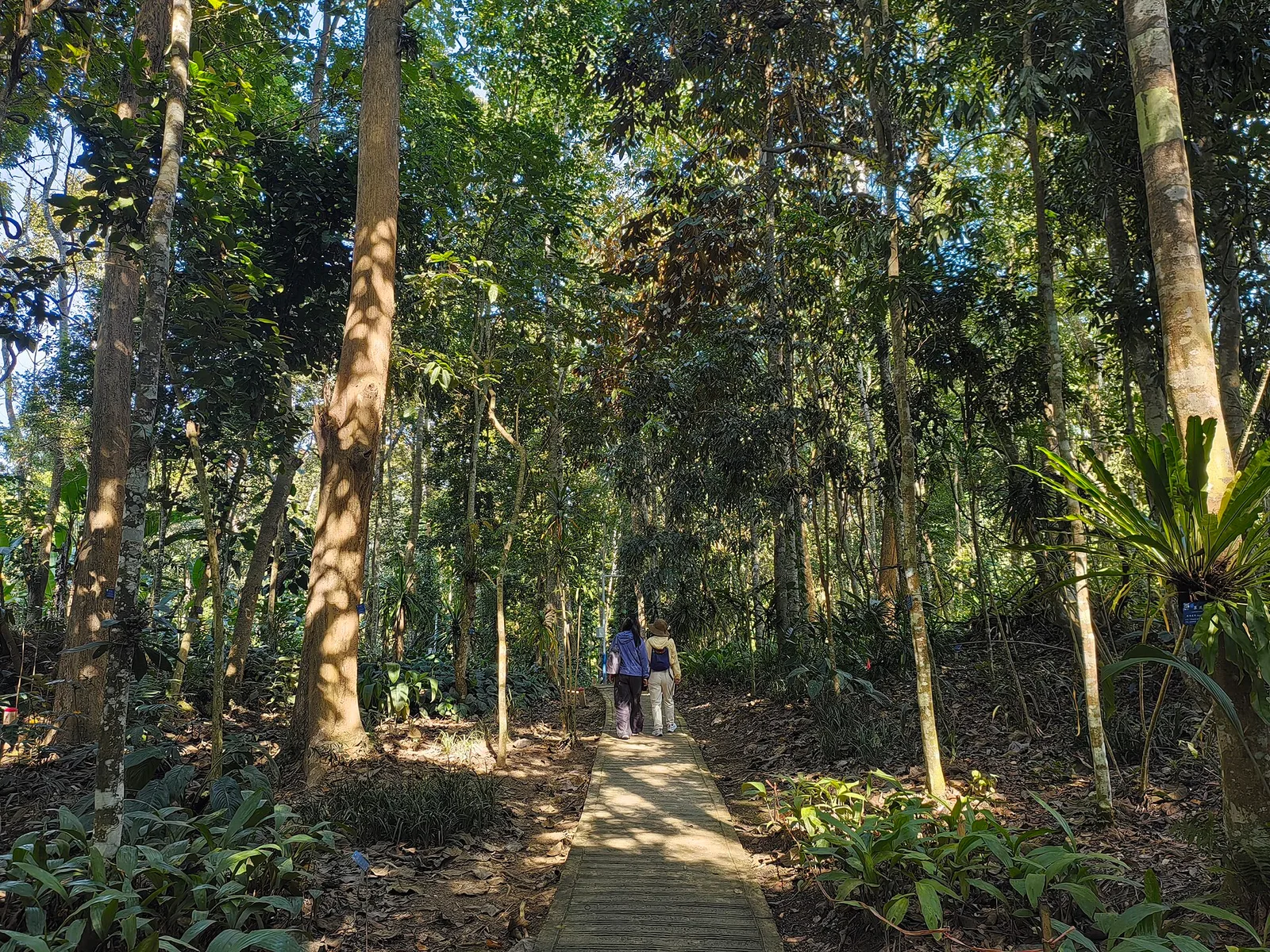
Morning mist in a rainforest where the crowns meet a hundred metres up, and Asian elephant tracks cross the muddy trail. In Xishuangbanna's tropical rainforest I found nature's gentlest embrace.
The morning mist had not lifted and our car had already been on the winding mountain road for nearly an hour. The driver was a local Dai man, humming a song I could not follow, stopping now and then to point out of the window: Parashorea chinensis, over eighty metres. I looked up where he pointed; the crown was lost in the mist, like a green tower.
This was my third day in Xishuangbanna. The first two had gone to the city and the night markets: the golden pagoda at Gaozhuang, Dai barbecue at the Starlight Night Market, the river breeze along the Lancang. Lively, and yet something was missing. Then a friend messaged to ask whether I wanted a day in the rainforest at Mengla, and I realised I had been waiting for a chance to hand myself over to nature.
Into the rainforest
The Parashorea forest at Mengla is one of the best-preserved rainforests in Xishuangbanna. No cable car, no lift: every step is your own. A boardwalk climbs from the forest floor through ferns and lianas and ends as a canopy walkway slung between the trees. Below is forty-odd metres of forest, above the enormous crowns; when the wind moves, the whole walkway sways.
I held the railing for the first few dozen metres, not daring to look down. Then I stopped, closed my eyes and simply listened: birds, insects, water somewhere below, and a rustle that must be plants growing. That was when I understood why rainforests are called the lungs of the earth — they have been breathing all along, and we are usually too loud to hear it.
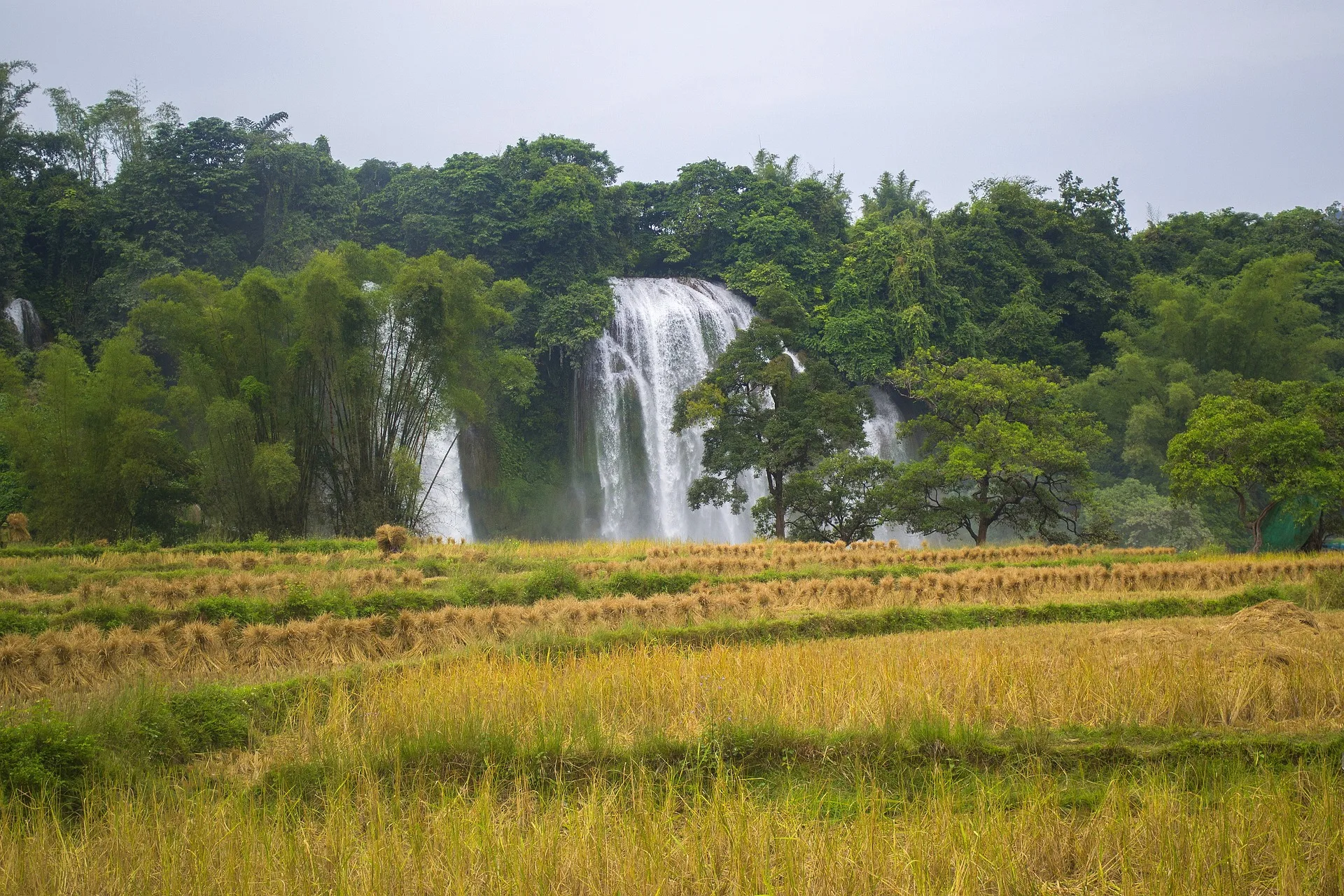
An encounter with elephants
In the afternoon the guide took us to the edge of a reserve near Wild Elephant Valley. With luck, he said, we might see wild Asian elephants.
We walked slowly along a muddy trail covered in fresh prints and dung; grass blades in the mud were still bent flat, the mark of a family rather than a single animal. The guide crouched and measured a print with his hand, then grinned: a whole family came past last night. He pointed to a banana grove across the river: elephants like to drink at dawn and dusk; at this hour they are probably napping in the trees.
We waited about an hour. Just as I was ready to give up, a low rumble came from the grove across the river, and an adult Asian elephant walked out unhurried, a calf behind her. They stopped at the water and drank, ears fanning like two big palm-leaf fans. Nobody breathed, nobody spoke; the only sound was camera shutters.
They have lived near the elephant station for years, the guide said quietly. We know this family.
Rules of the rainforest
Before we went in, the guide listed a few rules. They sound fussy; every one of them matters:
- Follow the guide. There is no main road in a rainforest. Many things that look like paths are animal trails: easy to get lost on, easy to tread on something you should not.
- Do not feed, chase or approach. Wild elephants are not zoo elephants. They have simply grown used to people moving about at a distance. Keeping that distance is the only courtesy and the only safety.
- Wear long sleeves and trousers. Not for the sun but for leeches and mosquitoes. Tuck your trousers into your socks and close cuffs and collar; that beats any repellent.
- Bring rain gear and grippy shoes. Rain in a rainforest arrives without warning, and wet boardwalk and mud are slippery. The tread on your soles matters more than the brand.
- Carry your rubbish out. There are no cleaners here. Whatever you brought in, you carry out.
One more rule he did not say, which I understood later: keep your voice down. Animals here are acutely sensitive to human speech. Only in silence might an elephant step out of the trees. After the herd appeared, the guide waved us back upwind, slowly, a step at a time, and nobody raised a phone and ran. Looking back, that restraint was the best part of the day.
Fitting this into a day
Mengla is a stretch of mountain road from Jinghong, so a same-day return is tight. Treat it as a full day out: leave in the morning and be back in town before dark.
With only one day, pick one: walk the canopy at Parashorea and look at how the forest is built, or head toward Wild Elephant Valley and take your chances with the elephants. Trying to do both means rushing and seeing neither. Elephants need luck; the walkway is guaranteed once you are there, so on a first visit I would choose the walkway.
When to go into the rainforest
Xishuangbanna has two seasons: wet and dry. November to April is dry — less rain, better trails, fewer insects, and the best window for the canopy walkway. May to October brings heavy rain: a greener forest and fuller waterfalls, but slippery boardwalks, so pack rain gear and proper shoes.
Mid-April's Water-Splashing Festival is the busiest week of the year; book rooms and cars early. If you want a quiet forest, avoid those days. For how to get from Jinghong toward Mengla and Wild Elephant Valley, seethis guide to getting around Yunnan goes into more detail.
What the forest taught me
On the way back I kept thinking about the day.
In the city I am used to slicing time into pieces: a meeting at this hour, a meal at that hour, a reply at another. In the rainforest time returns to its original shape — follow the light, follow the water, follow the animals' schedule. Elephants do not read clocks, and Parashorea does not grow faster for anyone.
The rainforest here has no name. It simply stands there, breathing slowly and deeply, telling me that I can slow down and that nature will catch me.