Bridges and caves in Guizhou, the water of Libo, and the limestone of Yangshuo, linked into 11 days on the water, with bookings, tickets and seasonal limits.
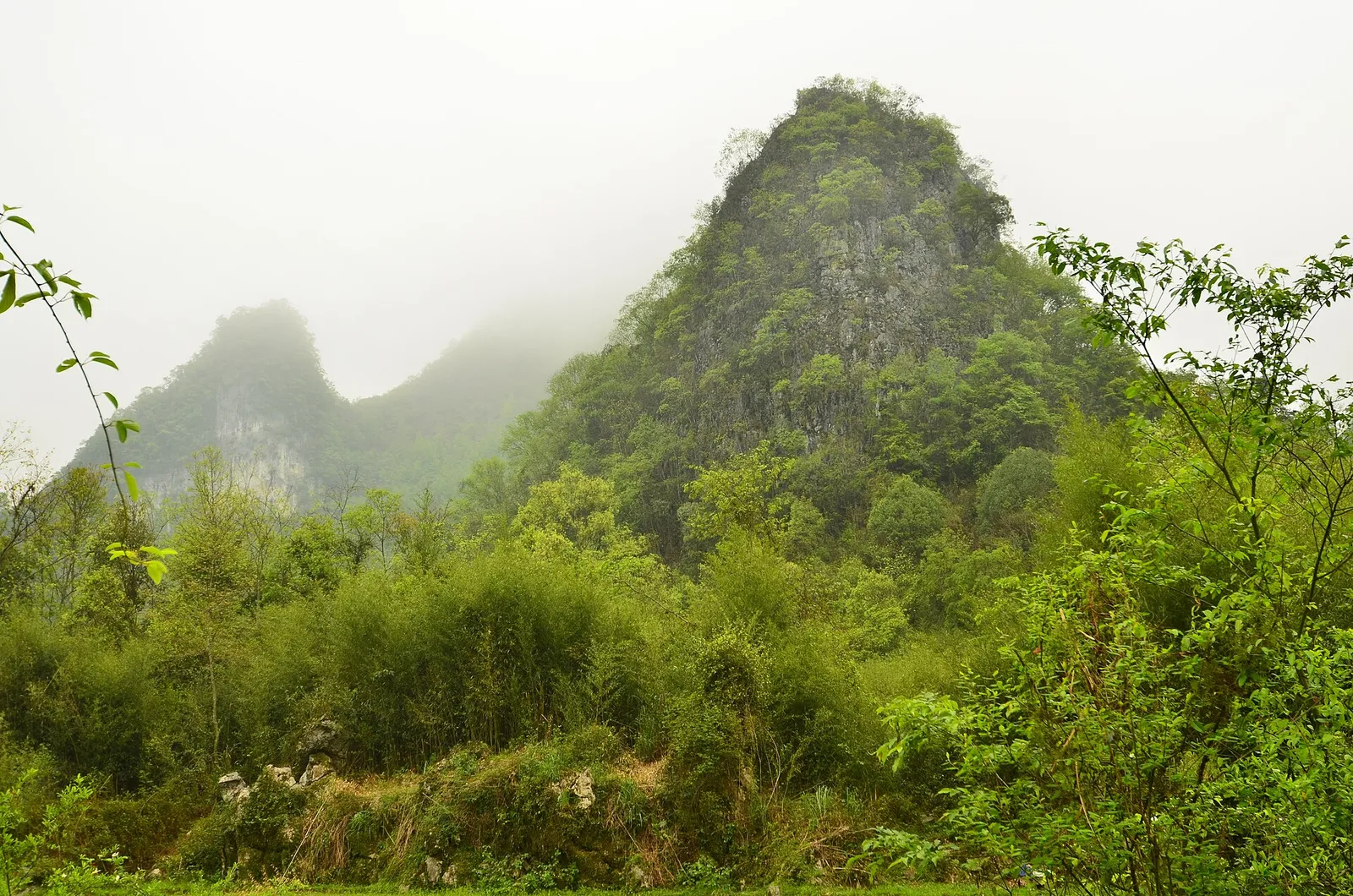
The karst of Guizhou and Guangxi holds two different kinds of water. In Guizhou it runs underground and through gorges, with bridges above it and caves beside it. In Guangxi it sits between limestone towers, moving slowly under bamboo rafts. Join the two and you get a route that plays hard without much climbing.
Eleven days, in through Guiyang and out through Guangzhou, cutting across Libo and Yangshuo. Bridges, caves, waterfalls, rafting and rock climbing each get a section. Nothing is extreme, but every day asks something of your body instead of asking you to stand behind a railing.
It suits people who like water, do not mind getting wet, and can handle height without chasing records. If you want bungee jumps and sky ladders, take the ten-day route instead. The high point here is on a rock wall, not in the air.
What this route is about
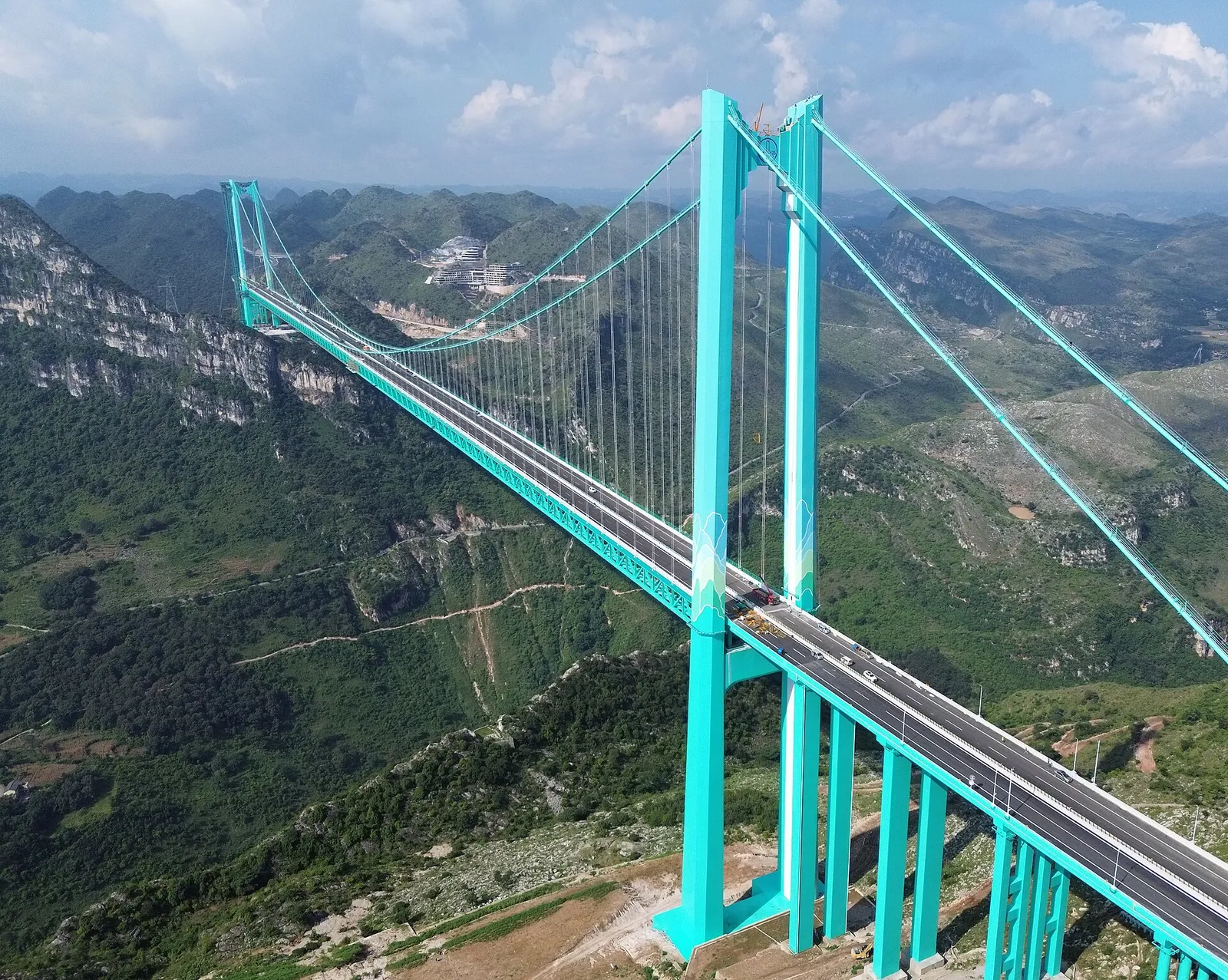
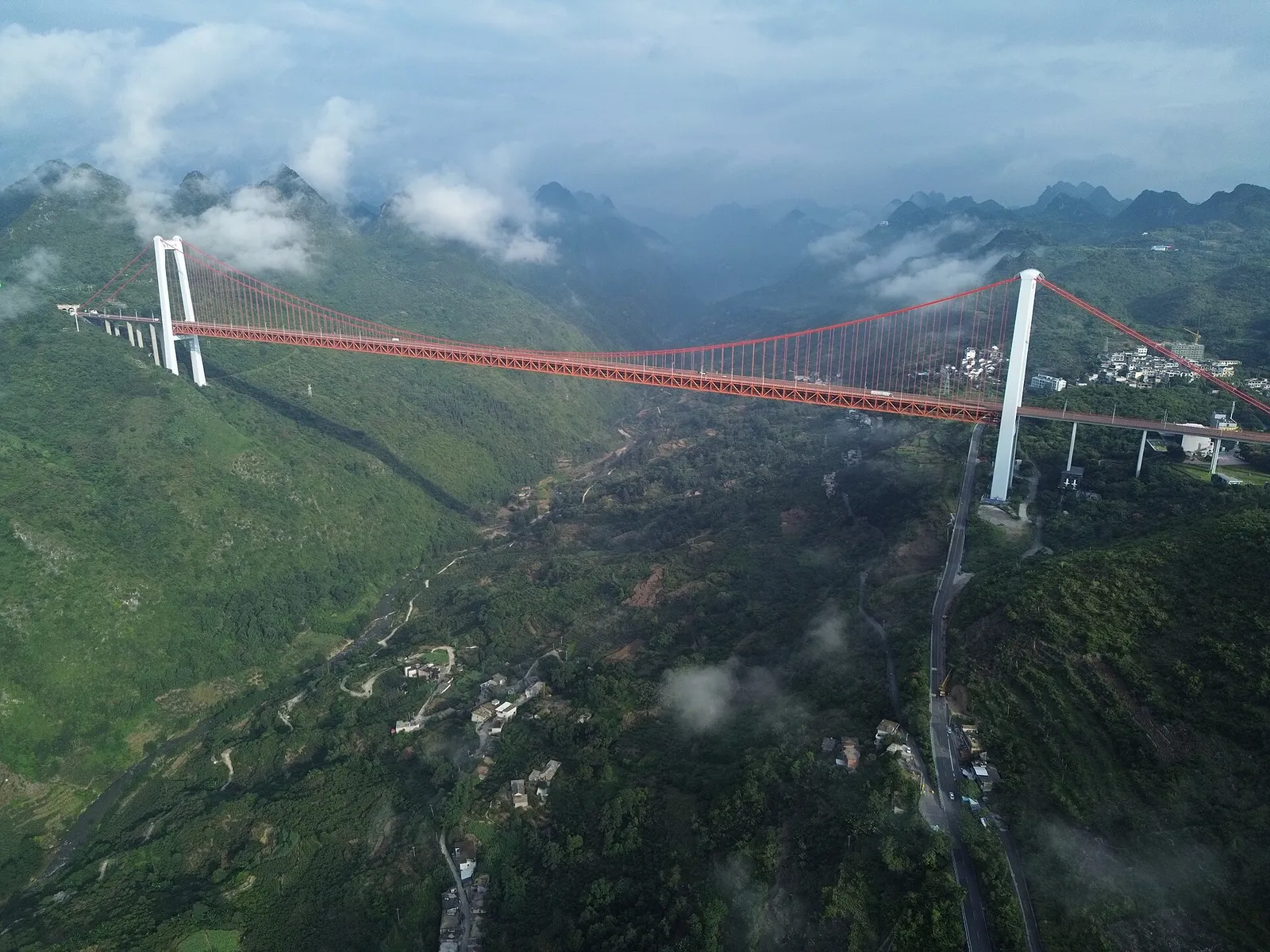
The stretch from Guanling to Ziyun is built to an engineering scale. The Huajiang Canyon Bridge deck sits more than 600 metres above the river; it opened in 2025 with a viewing level, a swing and high walkways. From the deck the gorge narrows to a seam and the river to a grey-green line.
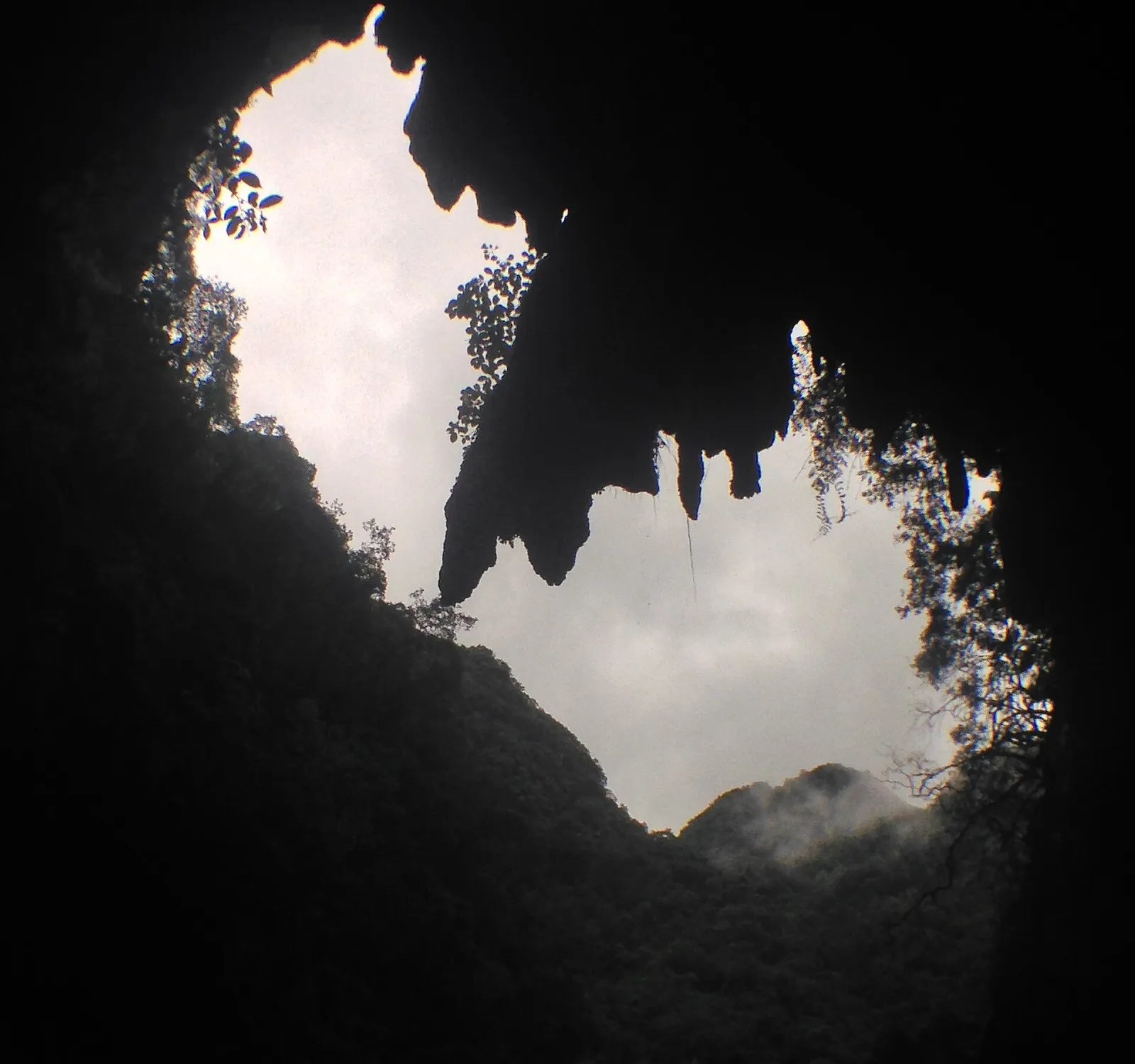
Further in, the Getu River turns karst inside out. Boats enter the Great Crossing Cave under a chamber hundreds of metres high, and light falls in at an angle from the entrance, clearest between eight and nine in the morning. The scenic area also runs a Spider-Man climbing show, in which Miao climbers go up a bare cliff with hands and feet and no rope.
At Libo the water changes character. Xiaoqikong runs blue-green from Wolong Pond down to Xiangshui River, past 68 cascades, a forest growing in the stream, and Mandarin Duck Lake, with shuttle buses between stops. This section asks nothing of your legs, only that you arrive before the crowds.
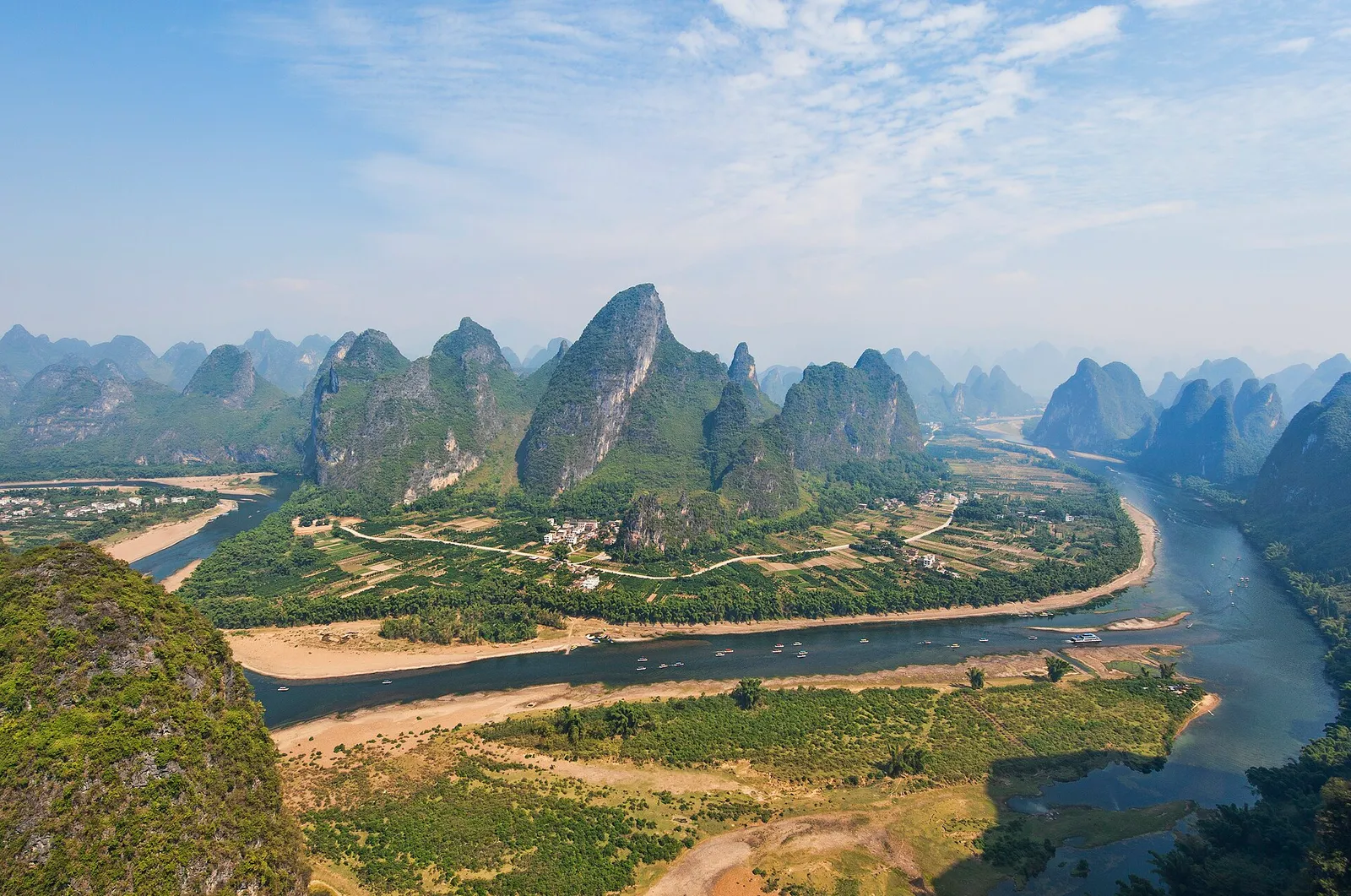
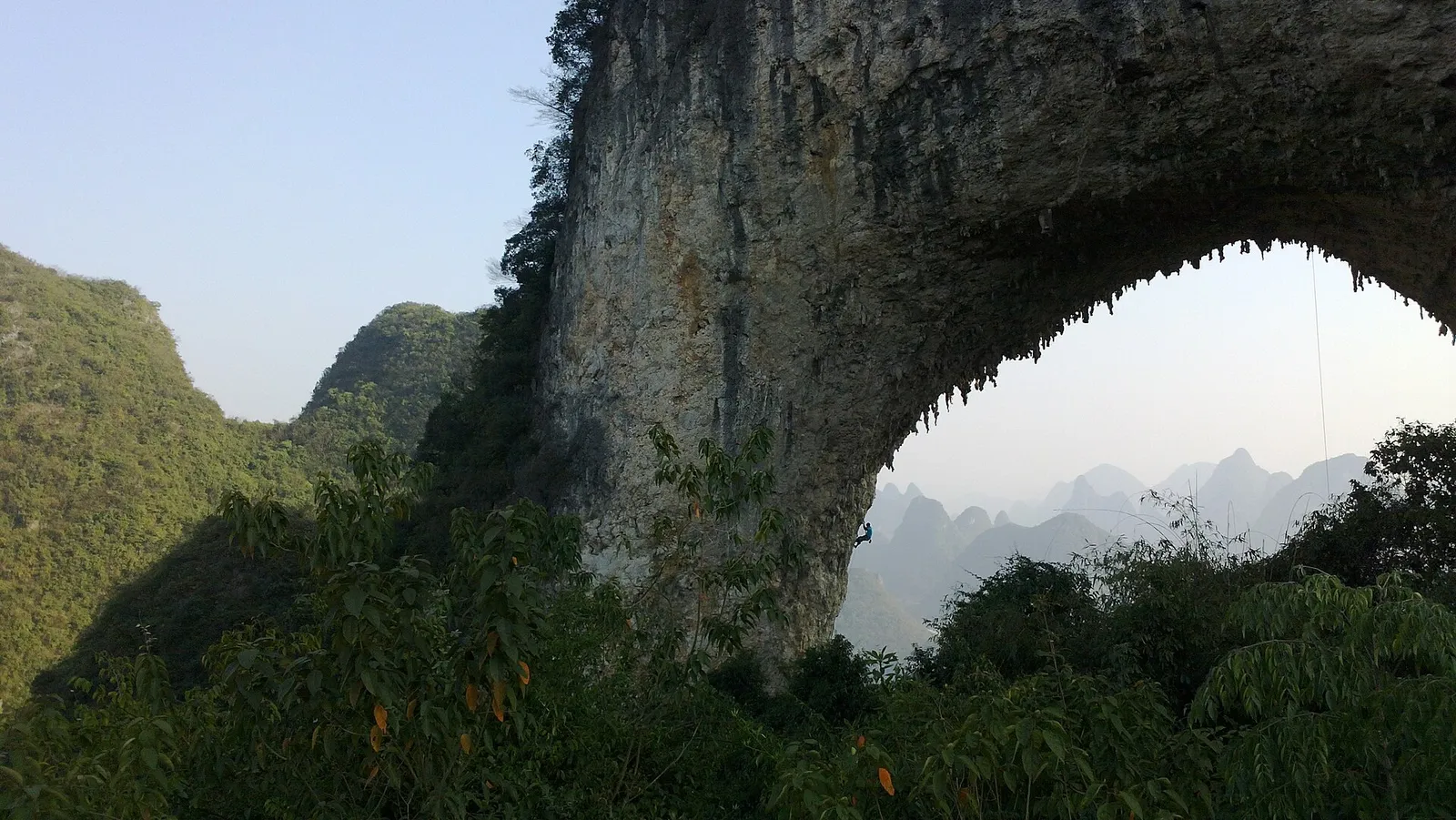
Yangshuo is the last stop, where water becomes a backdrop and limestone takes the lead. The county has more than a thousand bolted sport routes from 5.6 to 5.14, spread across Moon Hill, White Mountain and Lei Pi Shan, each with its own character. A beginner can take a half-day class and get fifteen metres up, hands on a first hold.
The 11-day plan
| Day | Plan | Base |
| D1 | Arrive in Guangzhou, take a train or flight to Guiyang | Guiyang |
| D2 | Guiyang to Guanling, Huajiang Canyon Bridge, Huangguoshu optional | Guanling or Ziyun |
| D3 | Getu River at Ziyun: caves, Blind Valley, Spider-Man show | Ziyun |
| D4 | Ziyun to Libo, afternoon on the Zhangjiang or in the old town | Libo |
| D5 | Xiaoqikong all day, west gate in, east gate out | Libo |
| D6 | Libo to Guiyang to Yangshuo, transfer day | Yangshuo |
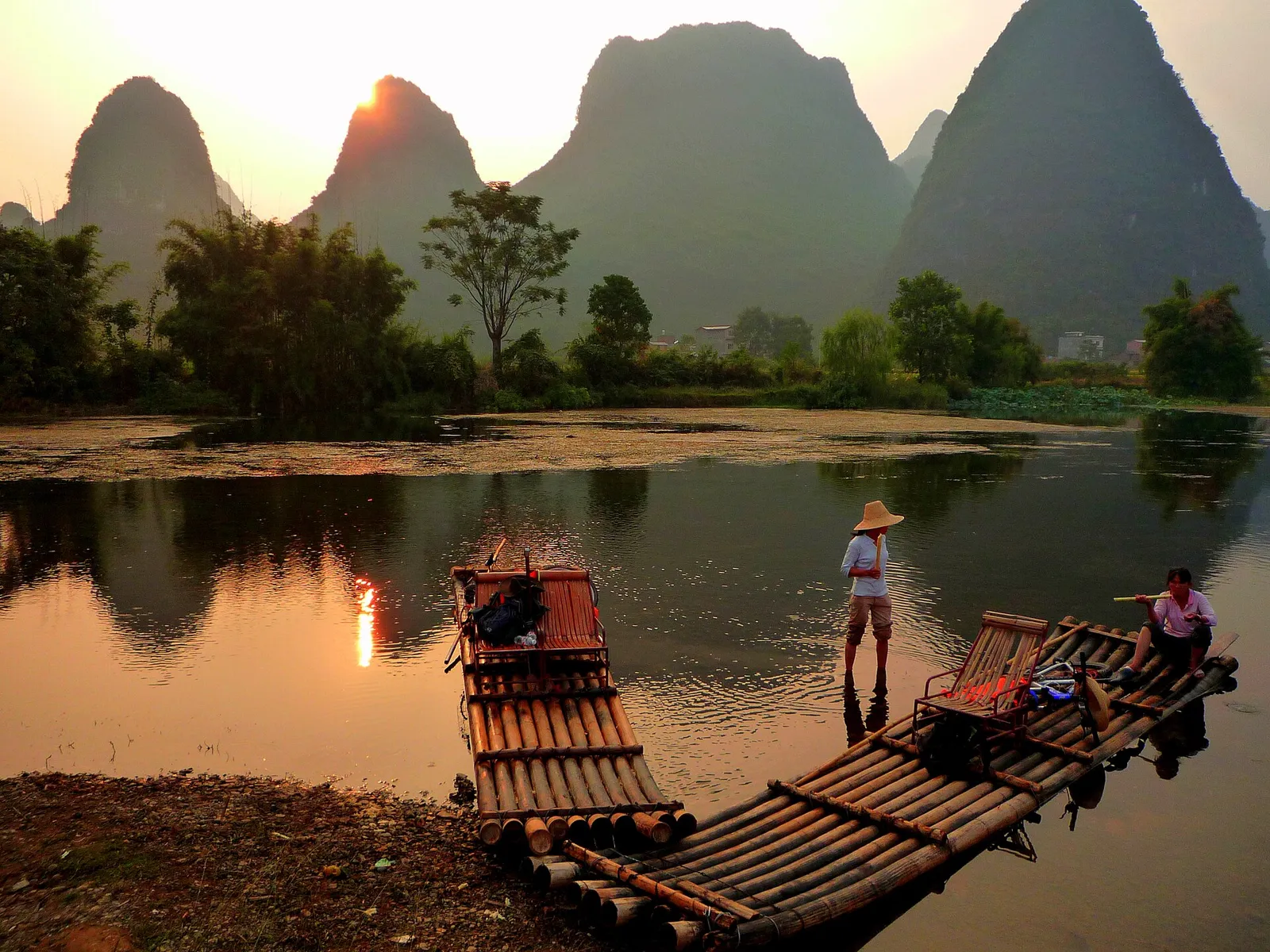
| D7 | Yangshuo: half-day climbing, Yulong River raft in the afternoon | Yangshuo |
| D8 | Yangshuo: second day on rock, or the Xingping stretch of the Li River | Yangshuo |
| D9 | Yangshuo to Guangzhou South to Qingyuan | Qingyuan |
| D10 | Gulongxia: rafting and the glass platform | Qingyuan |
| D11 | Qingyuan to Guangzhou, fly home | — |
D6 is the only awkward day. There is no direct train from Libo to Yangshuo, so you go back through Guiyang North, and with the half hour from Libo station into town the leg runs four and a half hours or more. Treat it as a rest day and schedule nothing else.
D8 is a split day. Anyone hooked on climbing will want another morning on rock, while a partner may prefer a raft on the Li River. In Yangshuo the two can happen separately and meet again for dinner.
Getting between the three clusters
| Leg | Option | Time | Reference fare (2026) |
| Guangzhou South to Guiyang North | High-speed rail | 4.5 to 5.5 hours | about CNY 300 second class |
| Guiyang to Guanling | Private car | 2 to 2.5 hours | CNY 700–900 per day |
| Guanling to Ziyun | Private car | 1.5 hours | same car and driver |
| Ziyun to Libo | Private car | 3 to 3.5 hours | CNY 900–1,200 per day |
| Libo station to Libo town | shuttle or taxi | 25 to 30 minutes | CNY 50–80 by taxi |
| Guiyang North to Libo | High-speed rail | 57 minutes to 1 h 20 min | about CNY 100 second class |
| Libo to Guiyang North to Yangshuo | High-speed rail transfers | 4.5 to 5 hours | about CNY 300 combined |
| Yangshuo to Guangzhou South | direct train | about 2 h 20 min | CNY 180–220 second class |
A private car beats the train inside Guizhou. Neither Getu River nor Xiaoqikong sits next to a station, and hauling luggage through three changes costs more time than the ticket saves in money.
Yangshuo station is not in town. It is more than twenty kilometres from West Street, so allow for a bus or taxi on arrival and do not plan as if the station were the hotel door.
Which gate at Xiaoqikong, and how do you book
West gate in, east gate out is the easy direction. The scenic area runs more than ten kilometres from west to east and drops in altitude that way, so reversing it hands you the longest climb of the day.
Peak-season entry is CNY 120 plus CNY 40 for the shuttle, and you must reserve a time slot online, often one to two weeks ahead in summer. The shuttle is not optional: the site is too large to cover on foot in a day. A combined ticket for Xiaoqikong and Daqikong costs CNY 170 including the shuttle and stays valid for seven days, which suits anyone adding a day in Libo.
Take the earliest slot. Work from Wolong Pond to Mandarin Duck Lake, the water forest and Cuigu Waterfall, then finish at the old seven-arch bridge and the 68 cascades before leaving by the east gate. After midday the coaches queue and the experience thins out.
The water forest section lets you walk in the stream. Wear shoes with grip, not sandals. By October the mountain water is already cold; ten minutes is plenty and longer soaks chill you through.
Is the Getu River worth a detour
Yes, if you accept its pace. Getu is not a place that stuns you at first sight. Its highlights are spread across a boat, a cave, a shaft of light and a person, and they need a full morning.
The leisure pass costs CNY 150 and covers entry, shuttle, boat and the Spider-Man show. The experience pass costs CNY 190 and adds a lift, the Blind Valley forest and the 2,000-step walkway to the Upper Crossing Cave. With children or older parents, take the first; if you want the walking, take the second.
The Spider-Man show runs four times a day at nine, eleven, two and four, on the cliff at the Great Crossing Cave. Claim a spot ten minutes early. The climbers use no protection at all on a cliff hundreds of metres high, and the silence afterwards lasts a while.
The light shaft depends on the season. From April to September it hits the river inside the Great Crossing Cave between 8:30 and 10:30; from late September to March it comes down through the Upper Crossing opening between eight and nine. Arrive early or miss it entirely.
The cave holds about 18 degrees year round. Walking in from a 30-degree afternoon is cold, so bring a light jacket.
Rock climbing in Yangshuo: what a beginner can do
You can get to the point of hanging on, letting go, and being caught by the rope. Beginner crags around Yangshuo carry plenty of 5.6 to 5.9 routes with simple movement; what gets tested is whether you will put your weight on the rope.
A half-day session runs three hours with harness, shoes, helmet and a guide on belay, costing CNY 200 to 300 per person with a two-person minimum. Full-day courses add multi-pitch climbing and technique and roughly double the price. Several schools teach in English and their guides work with foreign visitors regularly.
Each crag has its own character. Moon Hill sits at the end of the Ten-Mile Gallery, pierced by a natural arch that shifts from crescent to full moon as you move, shared by climbers and hikers. White Mountain has the densest spread, from 5.8 to 5.14. Lei Pi Shan is steeper and better suited to people who already climb.
Anyone afraid of heights feels fine at the base and starts sweating palms at ten metres, which is normal. Guides usually let you come down at a height you can accept, then add a few metres.
Beyond climbing, the Yulong River deserves half a day of its own. Rafts are priced per boat, two people each, and queue in high season. Reach the dock before eight and you save an hour.
Choosing between the two bridges
Both bridges near Guanling sit in the same gorge belt and can be seen in a day. Balinghe is the better structure visit: a lift drops you into the belly of the bridge and you walk inside the steel truss with 370 metres of air below. Huajiang is the better deck visit, with a CNY 99 second-level ticket and the gorge narrowing in front of you.
If you want to jump, both run commercial bungee; the rules and prices are in the 10-day adventure guide and are not repeated here. This route treats them as scenery rather than activities, saving your energy for the water and rock later.
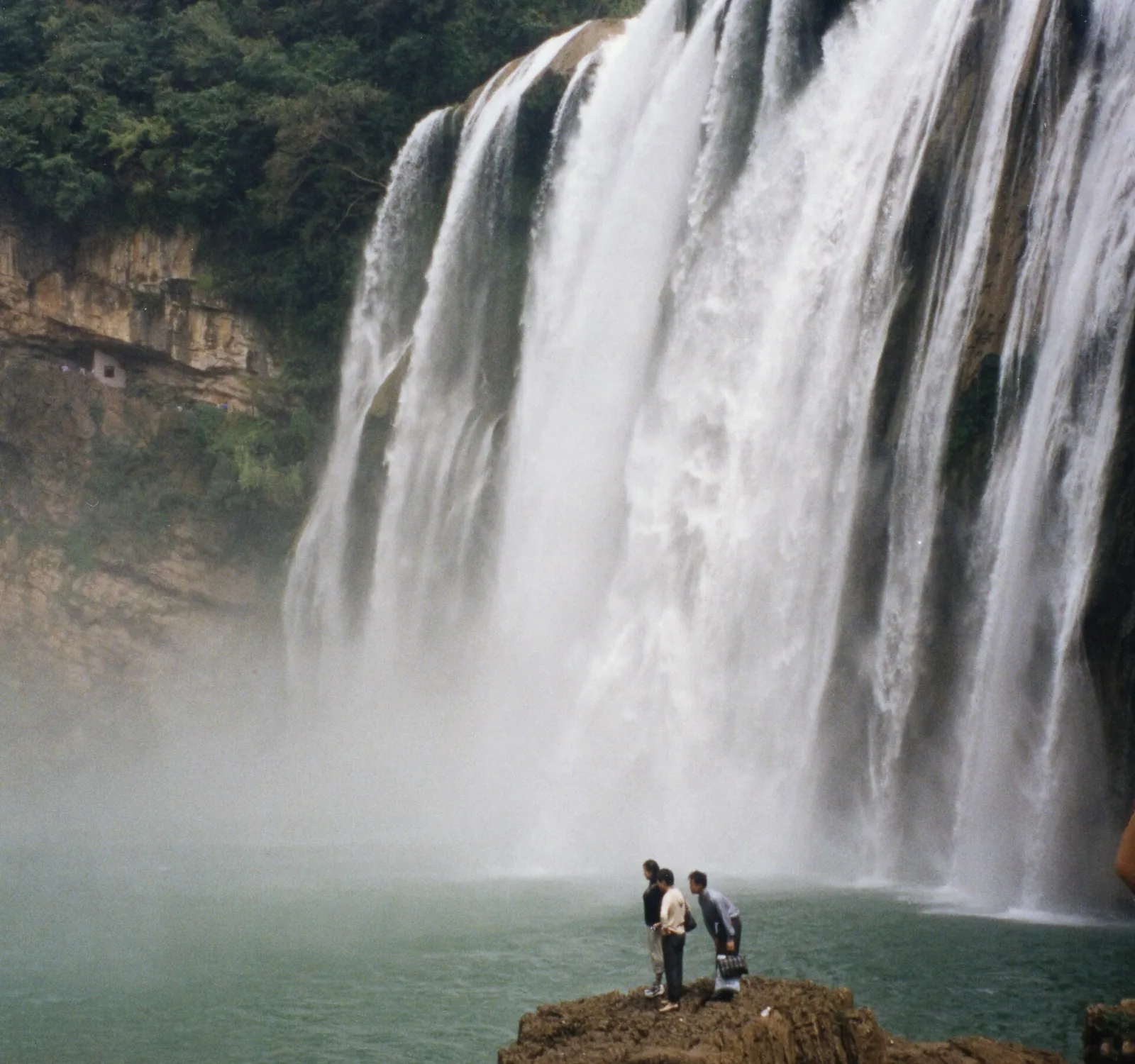
Huangguoshu is half an hour from Balinghe and worth half a day when the river is high. October is the start of the dry season and the falls thin out, but the crowds go too and the walkways open up.
Where to stay
In Guiyang, stay in Guanshanhu or the old town, convenient for both the station and the city. Guanling county has few options, one or two four-star hotels at most; for better rooms, base in Anshun and drive to Ziyun the next morning. Ziyun county runs to business hotels, with guesthouses at the Getu gate that are basic but cut the drive.
In Libo, stay in town: half an hour from the west gate, with food and rooms in one place. Accommodation inside the scenic area is scarce and expensive. In Yangshuo, stay on the edge of West Street or by the Yulong River; West Street is loud at night, the river is quiet but needs a taxi for everything.
In Qingyuan, stay in the city, half an hour from Gulongxia. Four-star is enough along this route; real five-star choice exists only in Guiyang and Yangshuo.
Where tickets and paperwork trip you up
Sites such as Xiaoqikong and Getu River now require real-name reservations, and whether a passport works online varies. Xiaoqikong books through the Guizhou mini-program or its official account; enter your passport details in full and keep the name order exactly as printed, because one wrong letter blocks entry.
Getu River also sells at the gate, but group and individual windows are separate and queues build in high season. Have your operator buy ahead so the window is only an ID check.
Train tickets need a 12306 account registered to your passport, and you use the manual gate at the station. Libo and Yangshuo are small stations with little English signage, so leave room for connections.
Book a Yangshuo climbing guide a week ahead. October is high season and good guides fill up. Put the crag, session length, gear, guide language and rain plan in the confirmation.
Rafting and bamboo rafts both stop for heavy rain. Guizhou storms arrive fast: check the forecast the night before, confirm with the operator in the morning, and do not force the plan.
What it costs
For three people over eleven days, excluding international flights and most meals, the 2026 order of magnitude looks like this.
| Item | Total for 3 |
| Four-star hotels, 10 nights, 2 rooms | CNY 10,000–18,000 |
| Upgrade to five-star | CNY 20,000–32,000 |
| Private car and transfers | CNY 9,000–13,000 |
| Trains and shuttles | CNY 3,000–4,500 |
| Tickets, boats and climbing courses | CNY 6,000–9,000 |
| English-speaking guide, per day | CNY 6,000–9,000 |
The four-star version runs 45,000 to 65,000 yuan; five-star runs 65,000 to 95,000. Activities cost far less than on the hard-adventure route, with most of the money going to cars and hotels. If you want to save, cut the hotel grade, not the driving.
The last word
After eleven days, what stays with you is mostly the colour of the water: the clear blue-green at Xiaoqikong, the dark green inside the Getu caves, the pale morning surface of the Li River. And the moment your hand opened on the wall at Moon Hill.
Nothing here forces you. You can raft without falling in, climb to five metres and stop, walk half the Getu walkway. The route offers participation, not a checklist.
For exact dates, tell us how many of you there are, who swims, and whether anyone wants to climb, and we can settle the route and bookings together. Start here: our contact page. For harder activities, read the 10-day adventure guide; if this is your first trip and you are still choosing an arrival city, see which Chinese cities to visit first。
Last updated: 3 November 2026