From the great halls of Zhijin Cave to the unlit caves of Maolan and the sinkholes of Wulong, 13 days spent below ground, with bookings, guides and seasonal limits.
The karst of Guizhou and Chongqing has two separate lives, one above ground and one below. On the surface you get peaks, gorges and waterfalls, all shape. Underground you get chambers, stalactites and buried rivers, all volume. Most itineraries stay on the surface, because the underground takes bookings, walking, damp and cold.
This route inverts that. Half of the thirteen days are spent in caves or on sinkhole floors, from a chamber at Zhijin big enough to hold an arena, to caves at Maolan with no lights at all, to the vertical slice of a Wulong sinkhole.
It does not suit people afraid of the dark or of tight spaces, or anyone with bad knees. It does not suit people who only want photographs either: nine out of ten cave shots miss what your eyes see.
What this route is about
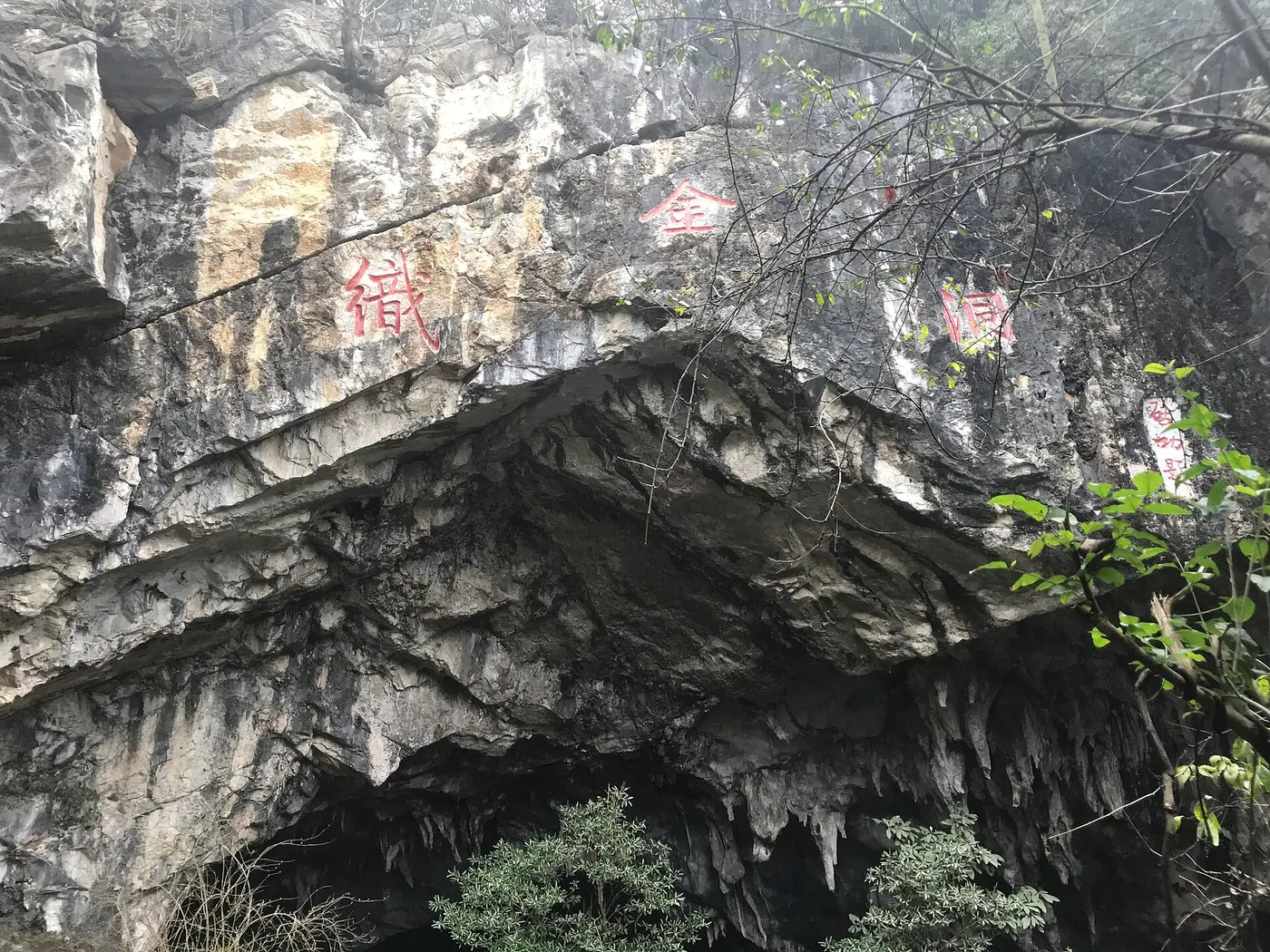
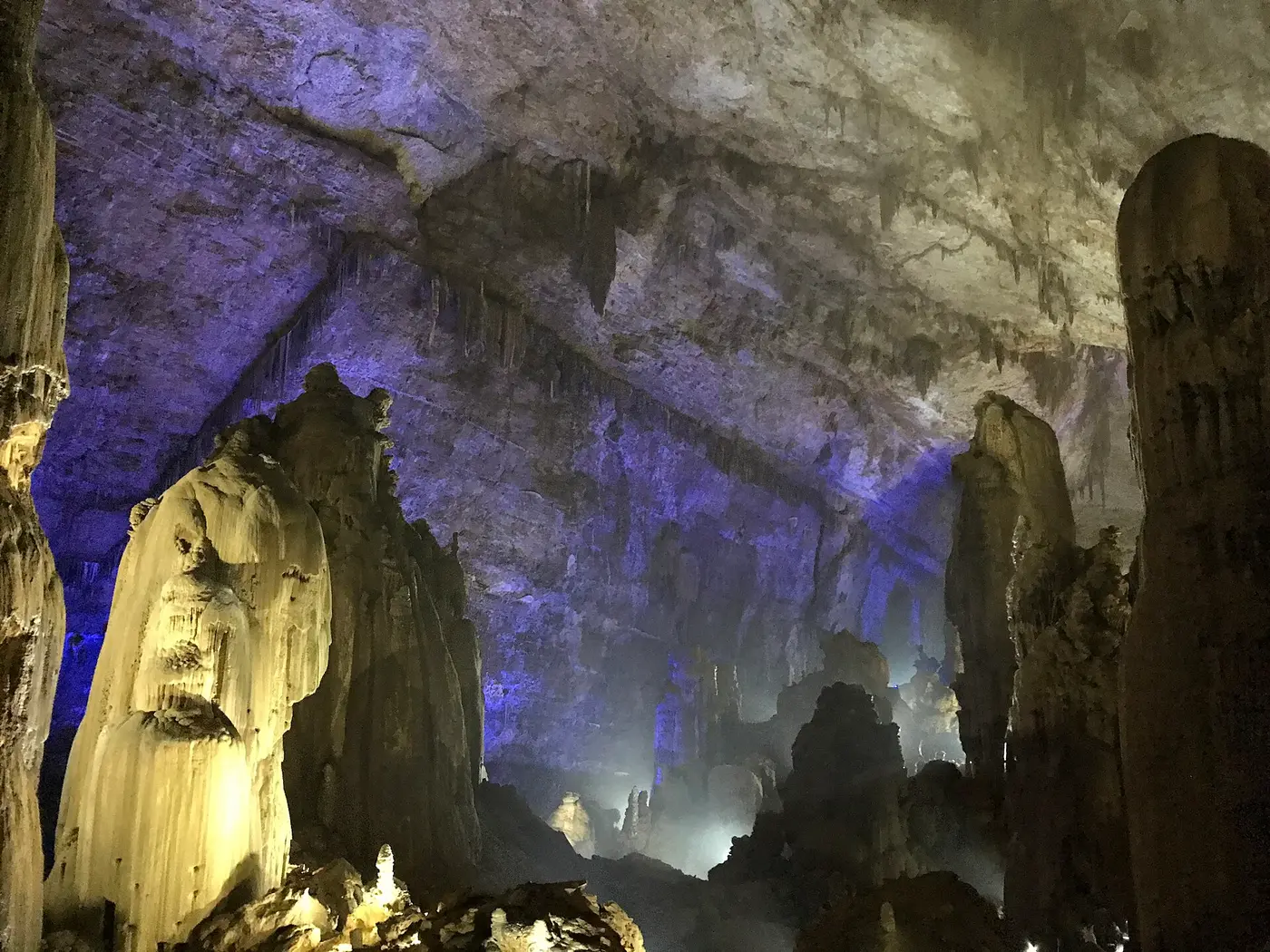
Zhijin is the extreme of the big chamber. The cave runs 6.6 kilometres one way, wide enough in places for several buildings side by side, with stalactites meeting the floor to form columns. Silver Rain Tree, Conqueror’s Helmet and Ten Thousand Mountains are the three you cannot skip, and the full walk takes three hours.
Maolan is something else. It is a reserve, not a scenic park: forest over cone karst, caves with no lights, no railings, and rubble and underground streams underfoot. You go in with a guide, and everything outside the beam of your headlamp is black. You cannot buy that experience in a developed park.
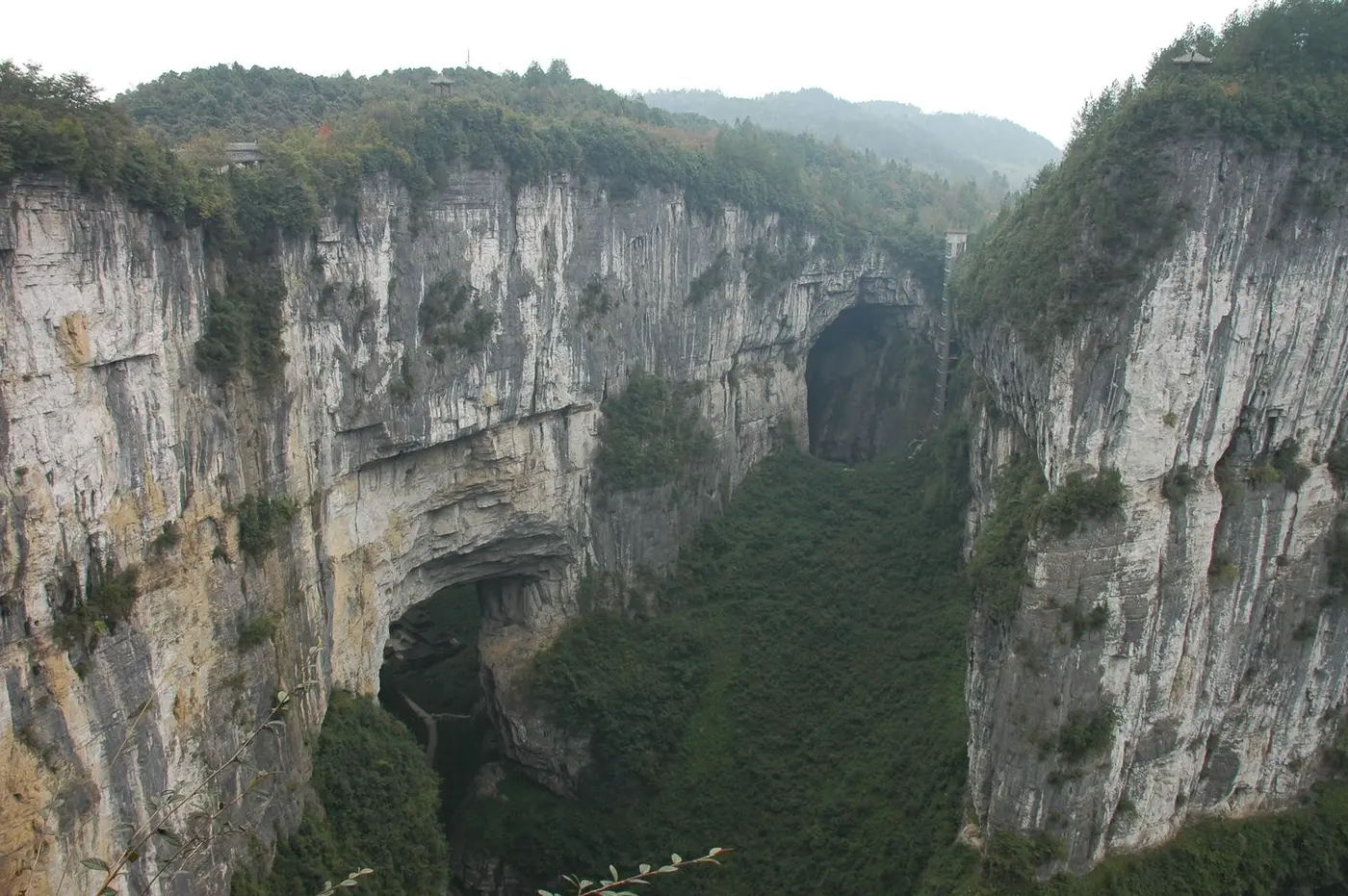
Wulong turns the underground inside out. Three natural stone arches form a bridge group over a sinkhole, and a lift drops you to the floor where you look up at 200-metre spans. Longshuixia is a narrow, deep crack that you walk to the bottom of, the walls almost closing overhead.
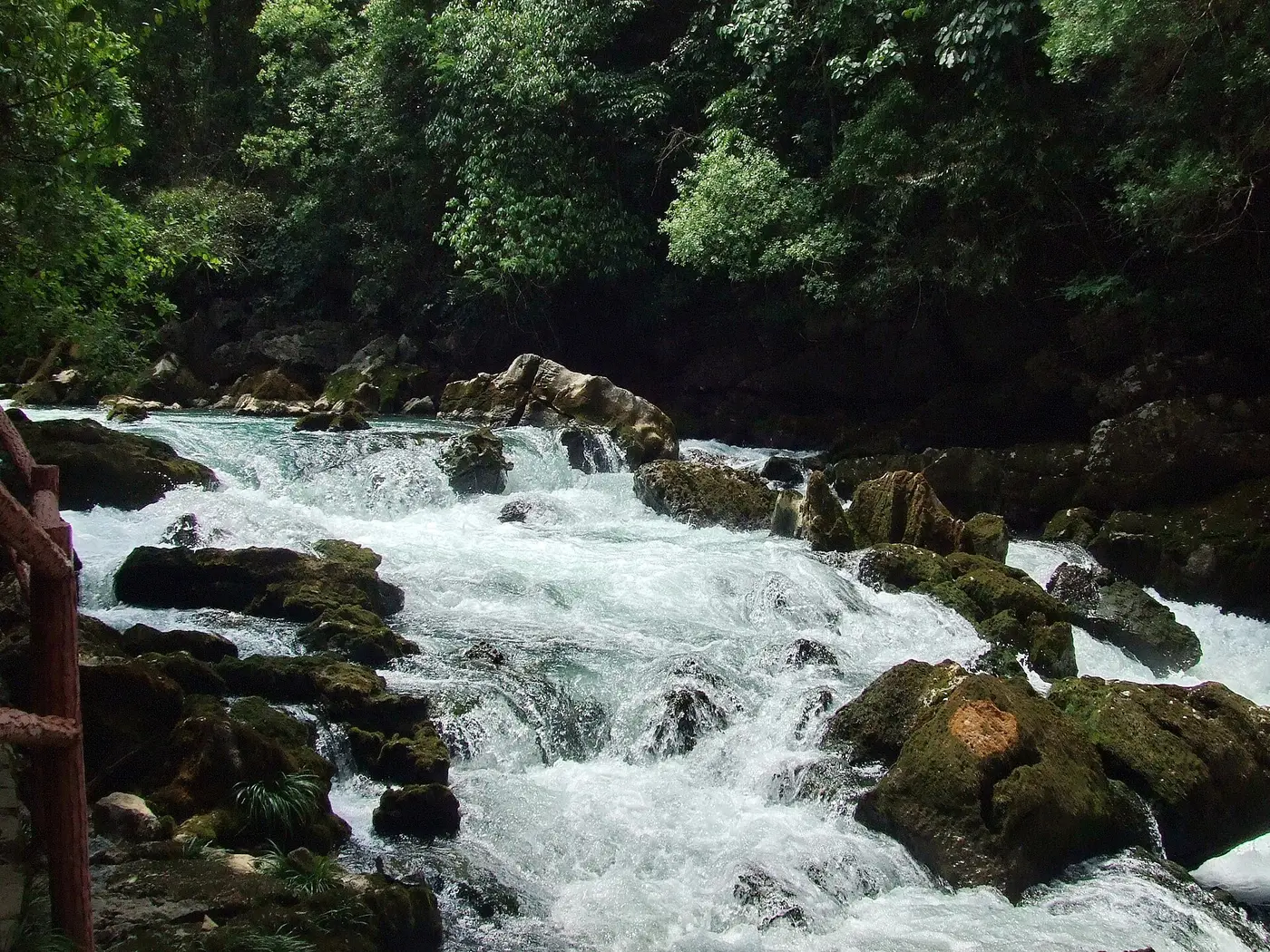
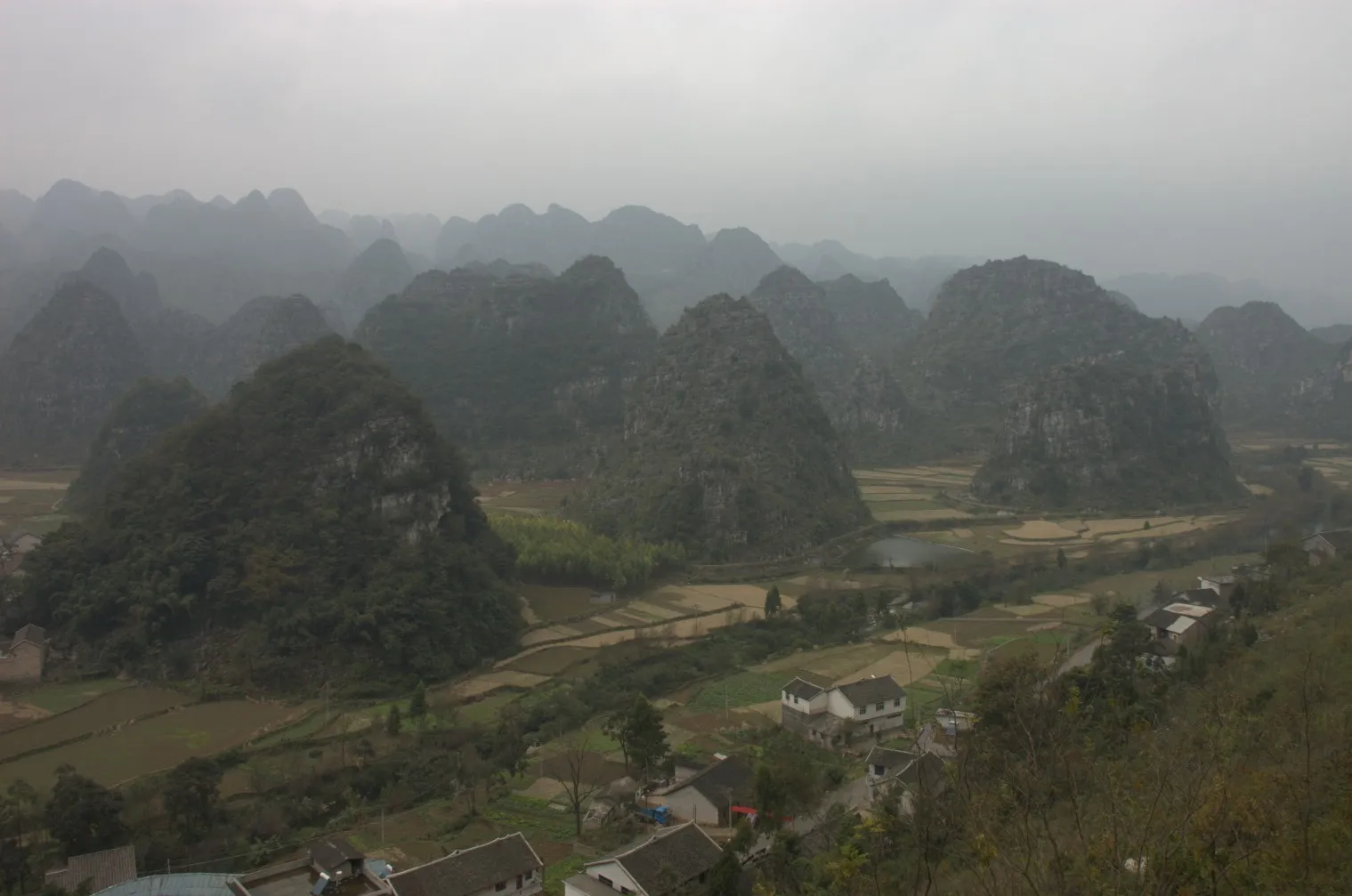
Two surface stops break it up. Wanfenglin’s cone peaks sit above golden rice in September and October, and the Maling River has cut a slit through the edge of Xingyi, with waterfalls hanging down the walls.
The 13-day plan
| Day | Plan | Base |
| D1 | Guangzhou or Shenzhen to Guiyang | Guiyang |
| D2 | Guiyang to Zhijin Cave, Zhijin Grand Canyon in the afternoon | Zhijin |
| D3 | Zhijin to Xingyi, Wanfenglin in the afternoon | Xingyi |
| D4 | Maling River Gorge, rafting or the walkway | Xingyi |
| D5 | Xingyi to Libo, transfer day | Libo |
| D6 | Maolan: primary forest and cave exploration | Libo |
| D7 | Daqikong and Libo town | Libo |
| D8 | Libo to Chongqing, transfer day | Chongqing |
| D9 | Chongqing to Wulong, Tiansheng Three Bridges | Wulong |
| D10 | Furong Cave and Longshuixia | Wulong |
| D11 | Wulong back to Chongqing, an easy city day | Chongqing |
| D12 | Buffer day for anything closed by rain | Chongqing |
| D13 | Fly home from Chongqing | — |
D12 is not padding. Caves and rafting both lose to weather: rain closes Maolan, high water stops the Maling rafts. A spare day at the end beats worrying in the middle.
How the transport connects
| Leg | Option | Time | Reference fare (2026) |
| Guangzhou South to Guiyang North | High-speed rail | 4.5 to 5.5 hours | about CNY 300 second class |
| Guiyang to Zhijin Cave | Private car | 1.5 to 2 hours | CNY 700–900 per day |
| Zhijin to Xingyi | Private car | about 3 hours | CNY 1,000–1,200 per day |
| Xingyi South to Libo | direct train | within 4 hours | about CNY 200 second class |
| Libo to Chongqing North | direct train | 4 h 22 min | CNY 243 second class |
| Chongqing East to Wulong South | High-speed rail | 30 minutes at best | CNY 67–118 |
Since the Panxing high-speed line opened in November 2025, Xingyi has moved from car-only to rail: under two hours from Xingyi South to Guiyang North, and within four hours to Libo. This is the biggest change on the route in years.
There is a direct train from Libo to Chongqing, leaving early afternoon and reaching Chongqing North before seven, so you never haul luggage through a Guiyang change. Wulong is half an hour from Chongqing East, far quicker than driving.
Zhijin Cave: 6.6 kilometres one way, without wrecking your legs
The route through Zhijin is one-directional, with no doubling back: 6.6 kilometres, two to three hours at normal pace. The cave holds 16 degrees year round and the floor is permanently wet, so grippy shoes are not optional.
Peak-season tickets run about CNY 140, low season 120, plus CNY 20 to 28 for the shuttle, which you need because the visitor centre sits well back from the entrance. Peak hours are 8:30 to 17:00 with last entry at 17:30, and entry is by real-name timed reservation through the official account or the major booking platforms.
The highlights line the walkway, so there is no hunting. Silver Rain Tree is a 150,000-year-old stalagmite lit on its own behind a barrier. Conqueror’s Helmet is fourteen metres tall and shaped like a helmet. Ten Thousand Mountains is layer upon layer of stone peaks, a mountain range moved indoors.
The first third is the busiest, where tour groups cluster at the entrance. Beyond Guanghan Palace the crowd spreads out and the second half is better. Slow walkers need not hurry; the shuttle picks up at the exit.
Zhijin Grand Canyon is part of the same ticket area, CNY 45, or CNY 200 for a combined ticket including the shuttle. The canyon takes ninety minutes, with sinkholes, a natural bridge and a short boat ride. Add it if you have time; skip it if not, since Wulong’s bridge group is the stronger version.
Maolan caves: are they worth the detour?
If you only want to have seen a cave, no. If you want to have crawled through one, give it a day.
Maolan is a UNESCO biosphere reserve, CNY 50 entry, open eight to six. The core is cone karst under primary forest, with nothing developed beyond the trails. Cave trips require a guide approved by the reserve: no lighting, no steps, no railings, and sections where you bend double or crouch.
A guide takes one group a day, priced per group including headlamps and helmets, with the rate rising by route length. Book a week ahead. Half a day covers one cave; a full day covers two or three, depending on fitness.
Inside it is colder than outside and close to saturated, so clothes dampen. Put phone and camera in a dry bag, and carry a torch as backup to the headlamp. Anyone claustrophobic should not test it on day one: start at a developed cave such as Zhijin and see how you handle enclosed space.
Wulong: which of the three to choose
Tiansheng Three Bridges first. Tickets are CNY 125, or about CNY 155 with the shuttle and lift, open eight to four thirty, two to three hours. The lift drops straight to the sinkhole floor, where three 200-metre natural arches close overhead and a reconstructed post station sits among the film locations.
Longshuixia second. CNY 85 to 105 including shuttle and lift, two hours walking the floor of a deep crack. The steps are wet and worse after rain.
Furong Cave third. CNY 80 to 98 including the cable car, two hours inside. It belongs to the same category of large show cave as Zhijin, so the sense of repetition is strong; with limited time, put the day into a deeper visit at Tiansheng instead.
Wulong tickets must be reserved by real name through the Wulong Karst Tourism account. There are no walk-up tickets on site, so arriving without a booking wastes the trip. This differs from most parks, so do not plan on old habits.
October: caves or rafting, which is safer
Caves are stable all year, and October is comfortable: low twenties outside, sixteen inside, and no sweat. The real risk is on the surface, where Maolan’s dirt trails slick over and the Maling River stops rafting when the water rises.
Maling rafting generally runs May to October, thirteen kilometres with close to 200 metres of drop, CNY 198 to 238. Early October is still possible; later in the month depends on water and temperature. The gorge walkway and lift run all year, the lift at CNY 30 one way, so a closed rafting day still delivers waterfalls. Last entry to the gorge is four in the afternoon, so do not arrive late.
Wanfenglin’s rice turns gold from late September into October, the best colour of the year. The CNY 50 shuttle runs the ridge road, a loop of just over two hours.
Where to stay
In Guiyang, stay in Guanshanhu, convenient for Zhijin and for Longdongbao airport. Zhijin county runs to business hotels, with one or two four-star options; guesthouses by the cave are close but basic.
In Xingyi, stay outside Wanfenglin for morning mist, or in town for food, ten minutes from the Maling River. In Libo, stay in town: an hour to Maolan and half an hour to Daqikong.
In Wulong, stay at Xiannüshan town at 1,200 metres, where October evenings need a jacket. Hotels there range from guesthouses to five-star and are the best on the route. In Chongqing, stay at Jiefangbei or near Chongqing North, depending on how you fly out.
What foreign visitors should watch for
Cave parks usually require real-name reservations, and whether a passport works online varies by operator. Both Zhijin and Wulong have run ID-card-only versions, so the reliable route is to have your operator book and hand you the code and entry slot.
Wulong does not sell walk-up tickets, which matters most for foreign visitors: you find out at the gate that a reservation was required, and you are not getting in that day.
Maolan guides generally speak only Chinese. Ask for an interpreter in advance and expect a separate fee. Mobile signal is poor underground, so confirm the route and meeting point before entering.
Cave photography is lightly restricted, though tripods are often banned, and drones are banned in every park. A small LED panel is more useful than a big rig.
Read the insurance terms. Cave exploration and rafting count as high-risk activities and are excluded by most standard travel policies; only specialist products cover them.
What it costs
Three people, thirteen days, excluding international flights and most meals.
| Item | Total for 3 |
| Four-star hotels, 12 nights, 2 rooms | CNY 12,000–20,000 |
| Upgrade to five-star | CNY 24,000–36,000 |
| Private car and transfers | CNY 11,000–15,000 |
| Trains | CNY 4,000–5,500 |
| Tickets, shuttles and cave guides | CNY 8,000–12,000 |
| English-speaking guide, per day | CNY 8,000–11,000 |
The four-star version runs 55,000 to 75,000 yuan; five-star runs 75,000 to 105,000. Tickets take a bigger share here than on the other routes, and cave guides are priced per group, which stings when the group is small.
The last word
Thirteen days in, your idea of a cave changes. Zhijin shows you how large one can be, Maolan how dark, Wulong what is left when one collapses.
The pace is gentler than it looks. One main site a day, constant cave temperatures, no sun and no cold, and the real strain is stairs and standing. A pair of comfortable shoes matters more than any gear.
For exact dates, tell us how many of you there are, whether anyone is claustrophobic, and who will crawl, and we can settle the route and guides together. Start here: our contact page. To walk mountains above ground, read the 12-day peak-country hike; to play in the gorges, read the 11-day canyon and river route。
Last updated: 3 November 2026