Glass-bridge bungee, cliff via ferrata and two record bridges in 10 days, with routes, transport, booking limits and what it does to your body.
With ten days off, there are only a few ways to fit China’s most physical thrills into one trip. A bungee platform on a glass bridge, a via ferrata bolted to a cliff, and record-setting bridges over limestone gorges are spread across Guangdong, Hunan and Guizhou, separated by the Wuling and Wumeng mountains. People have tried to compress them into seven days and spent half the trip in a car.
Ten days is enough, with two conditions: you accept one long cross-province transfer, and you accept that you will not jump every bungee on the list. The route links three clusters, each with its hardest activities within an hour’s drive, joined by high-speed rail and one short flight.
It suits people with outdoor experience, no fear of heights, and a willingness to pay for activities separately. It does not suit families with young children, or anyone counting check-ins. Every stop here needs half a day to a full day, and nothing more fits.
Why this route works
Each cluster offers something the others do not.
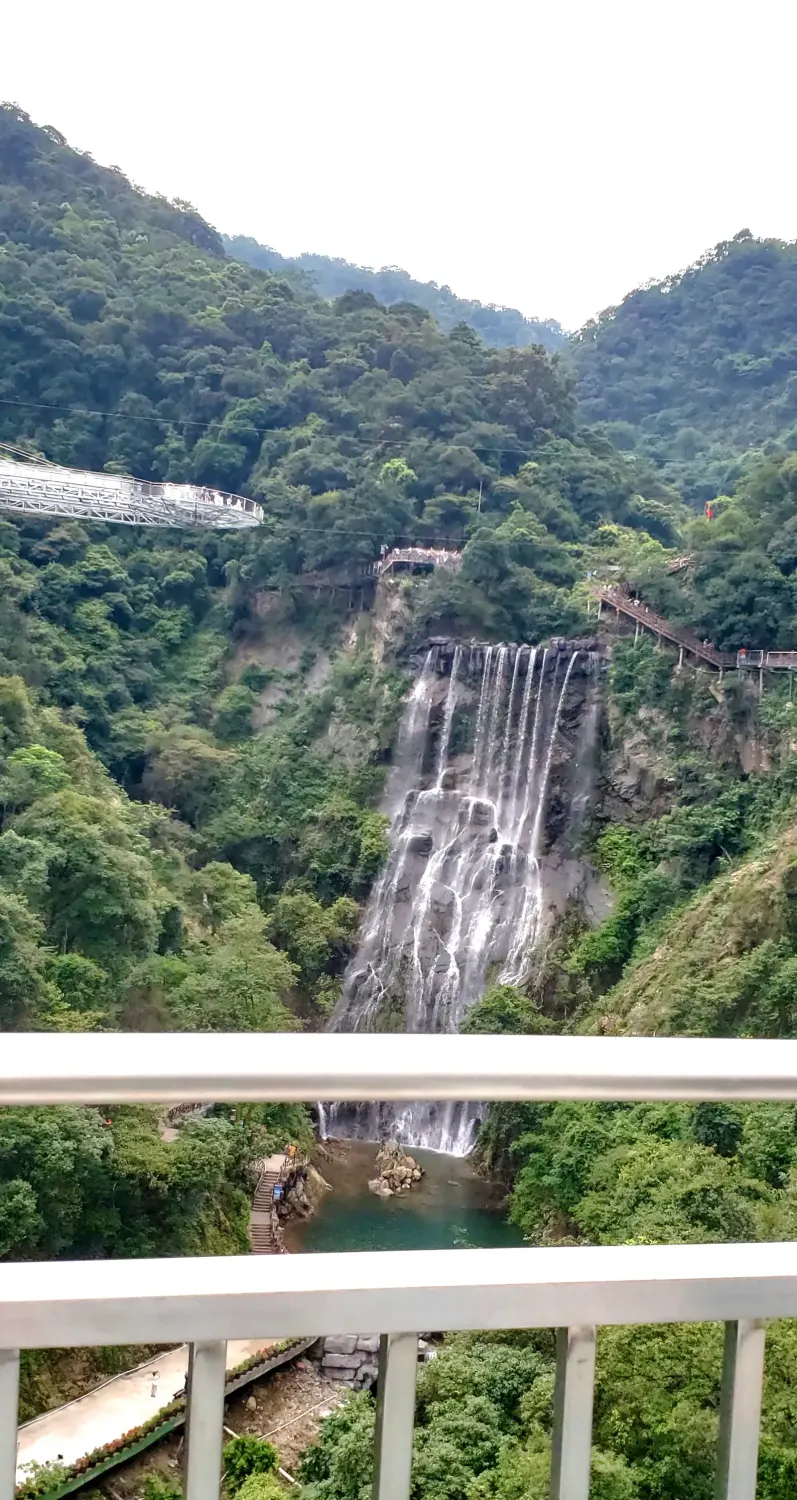
Gulongxia in Qingyuan is about water: a six-kilometre channel with a 378-metre drop, rafting from mid-April to the end of October. The same gorge has a glass platform and a cliff-side toboggan, so a closed rafting day does not waste the trip.
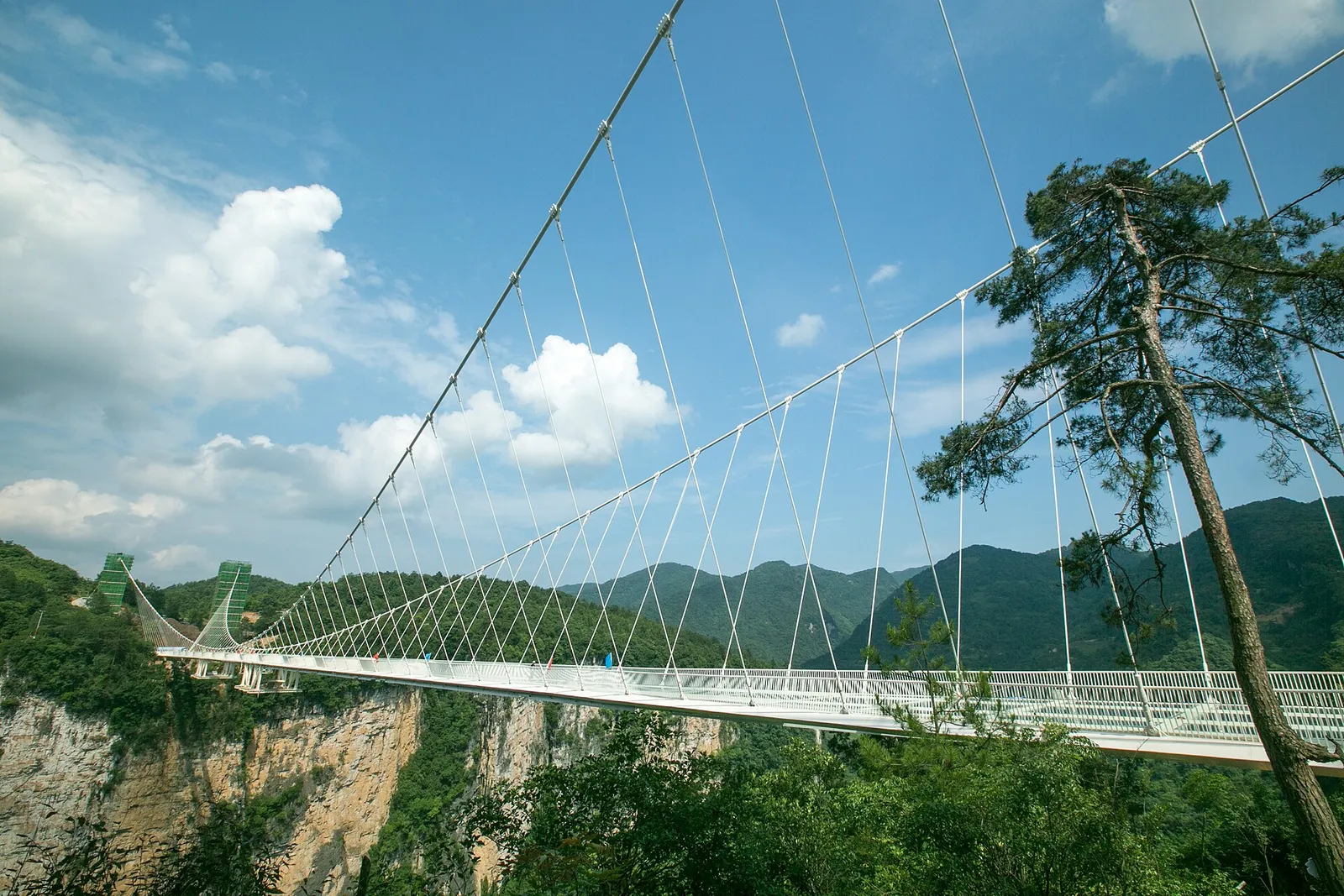
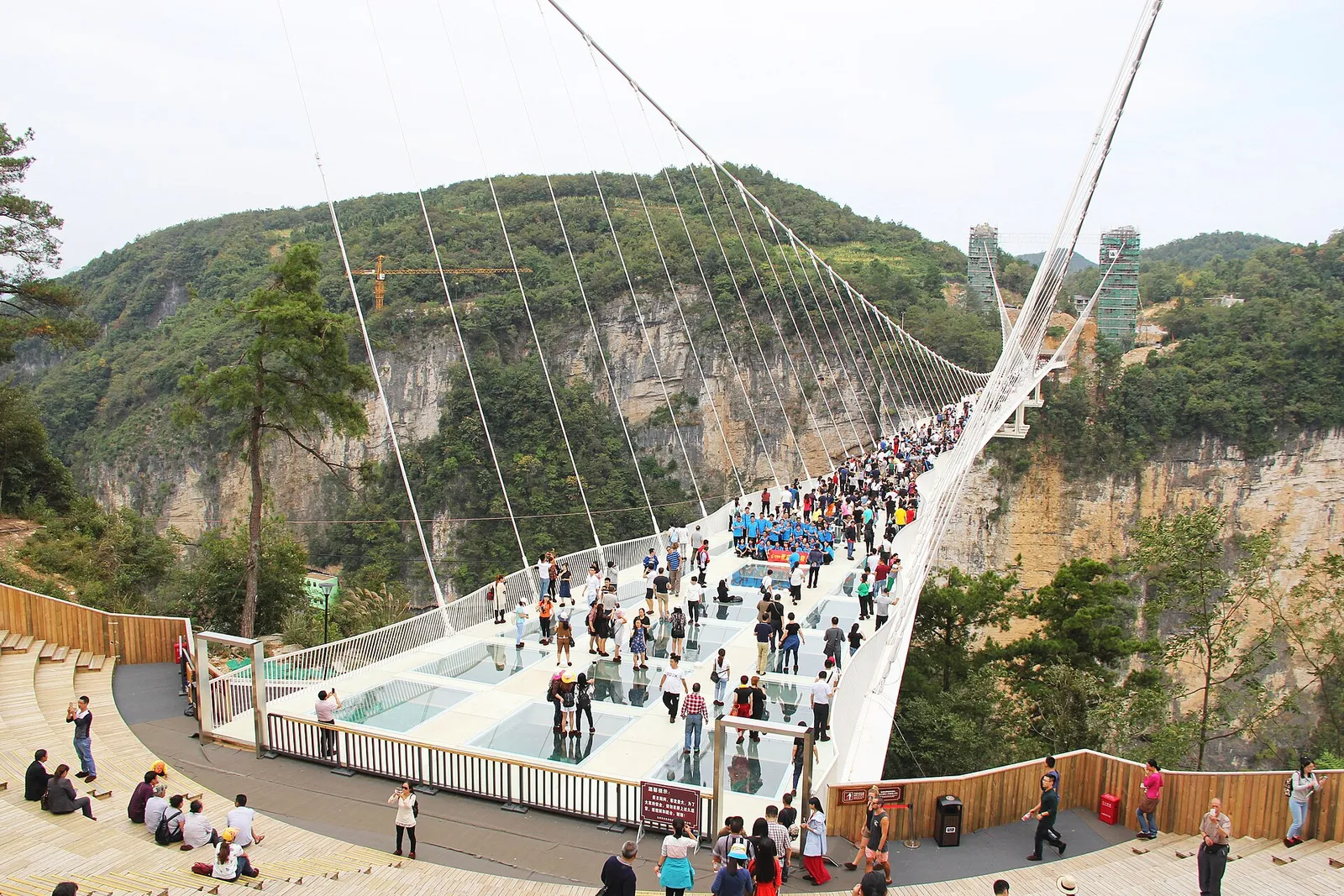
Zhangjiajie is vertical. The Grand Canyon glass bridge hangs 300 metres above the gorge floor, with a 260-metre commercial bungee mounted on the deck. The via ferrata on Qixing Mountain runs 1,200 metres along the cliff and ends with a 168-metre ladder pitched at 51 degrees. The two are less than an hour apart, and they feel nothing alike: one is a fall, the other is a climb.
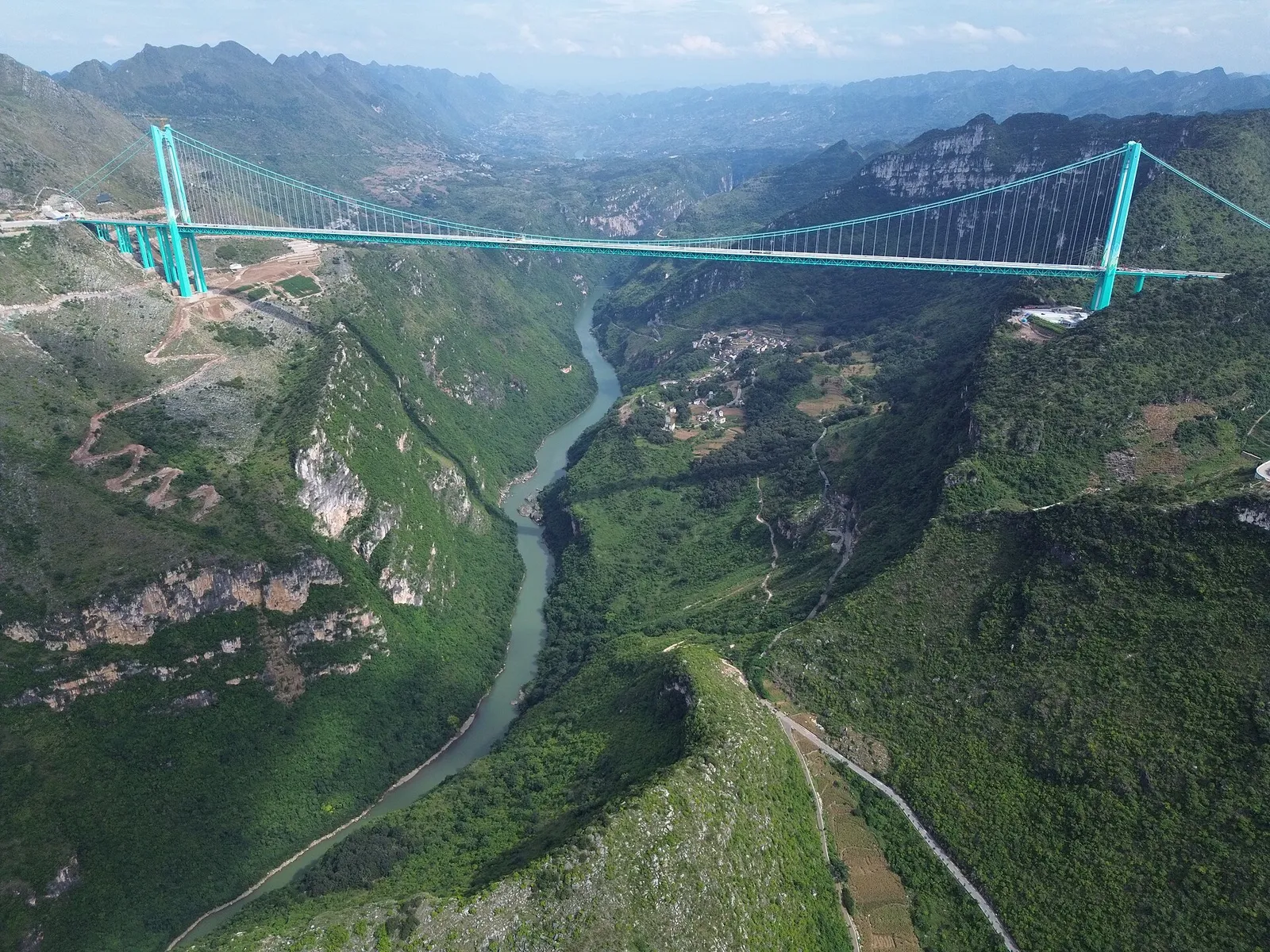
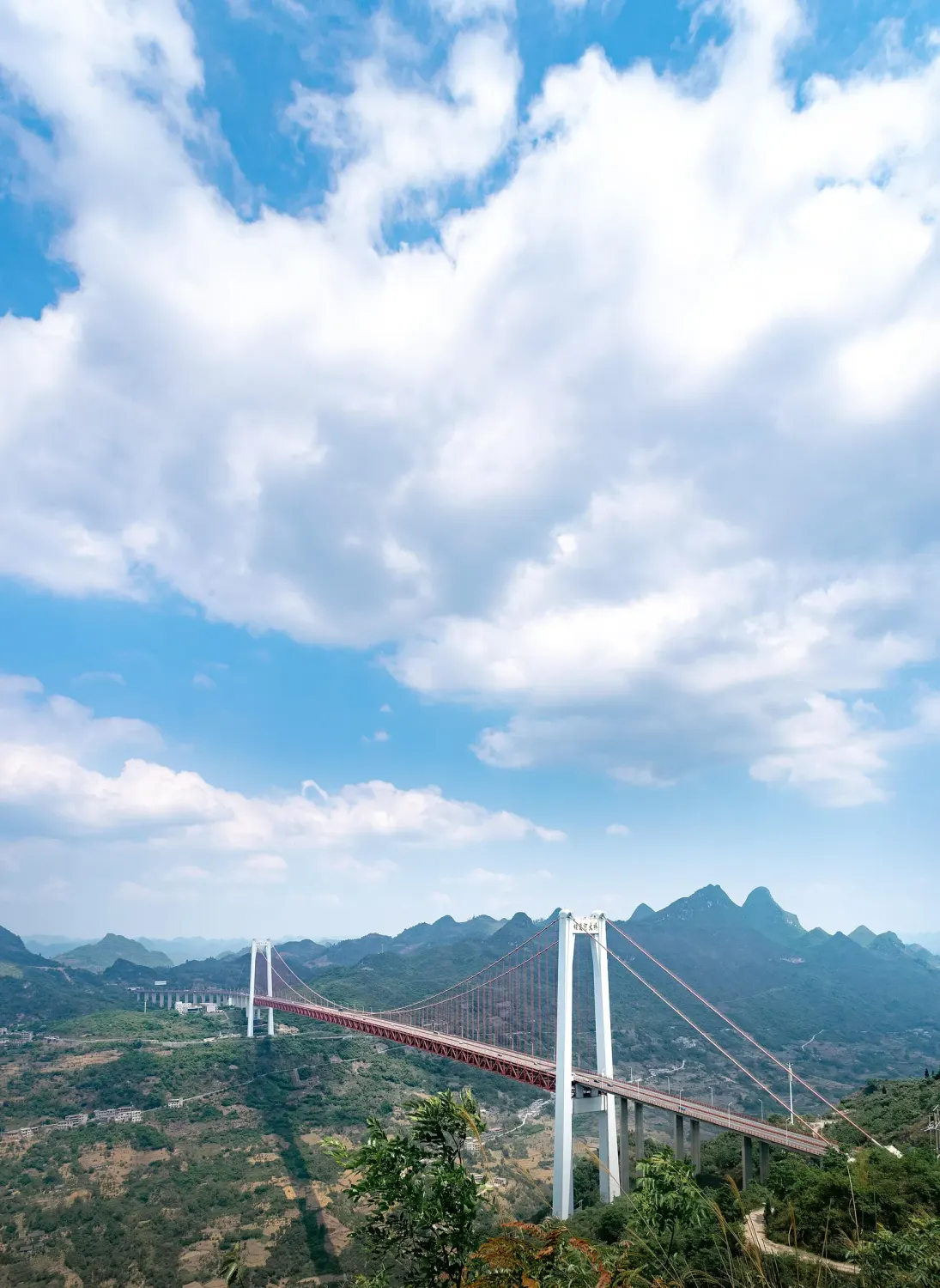
Anshun to Guanling is about engineering. The Balinghe Bridge deck sits 370 metres above the valley, and its bungee holds a Guinness record. The Huajiang Canyon Bridge, opened in 2025, carries its deck 625 metres above the river and runs sightseeing and adventure activities on the structure itself. Both bridges sit in the same gorge belt and can be done in one day.
The 10-day plan
| Day | Plan | Base |
| D1 | Arrive in Guangzhou or Shenzhen, transfer to Qingyuan, rest | Qingyuan city |
| D2 | Gulongxia: glass platform, waterfalls, cliff toboggan; rafting depends on the season | Qingyuan city |
| D3 | Qingyuan to Baiyun Airport to Zhangjiajie, arrive in the afternoon, no hard activities | Zhangjiajie city |
| D4 | Zhangjiajie Grand Canyon: glass bridge and bungee | Zhangjiajie city |
| D5 | Qixing Mountain: via ferrata, sky ladder, Sky Eye platform | Zhangjiajie city |
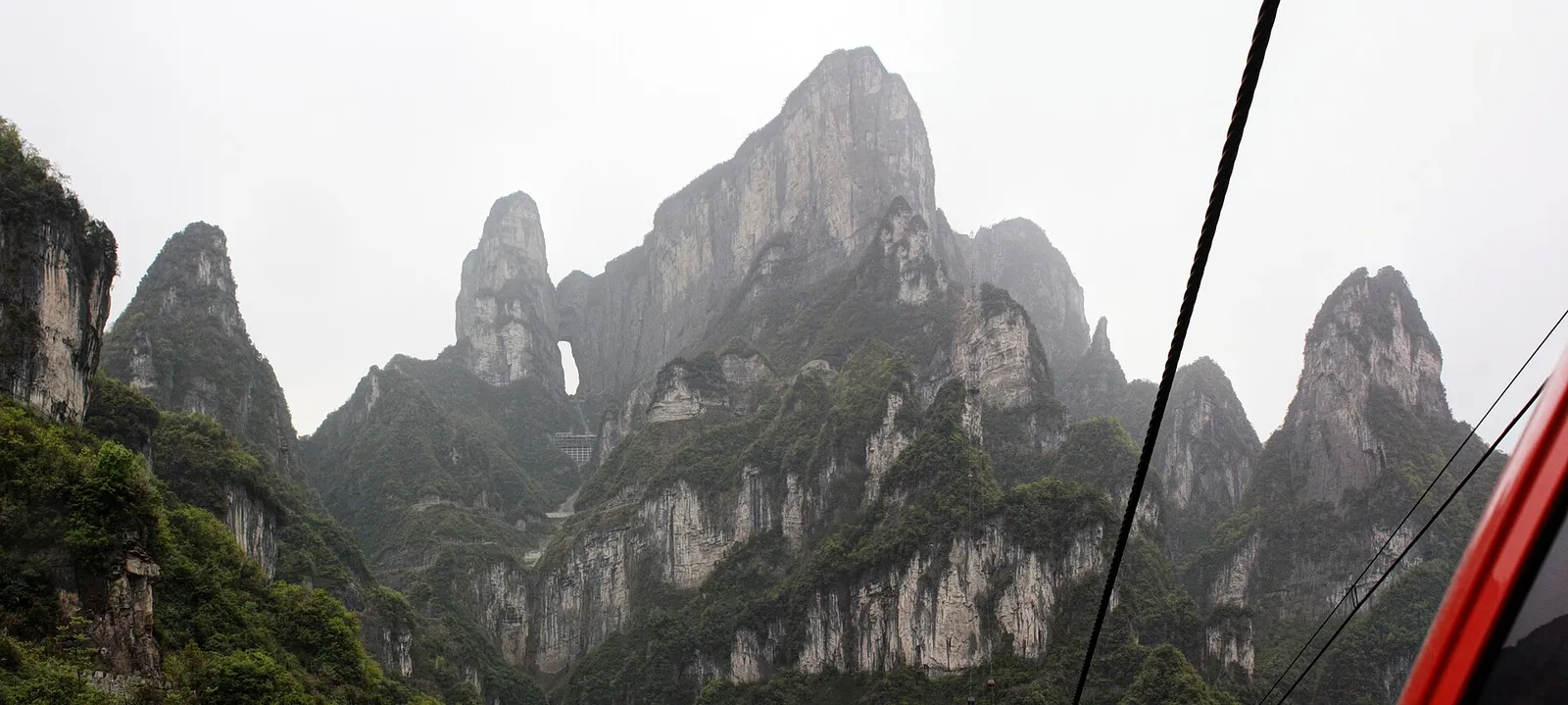
| D6 | Tianmen Mountain cable car and glass walkway, an easier day | Zhangjiajie city |
| D7 | Zhangjiajie West to Guiyang North to Anshun West, transfer day | Anshun |
| D8 | Balinghe Bridge and Huajiang Canyon Bridge | Anshun or Guanling |
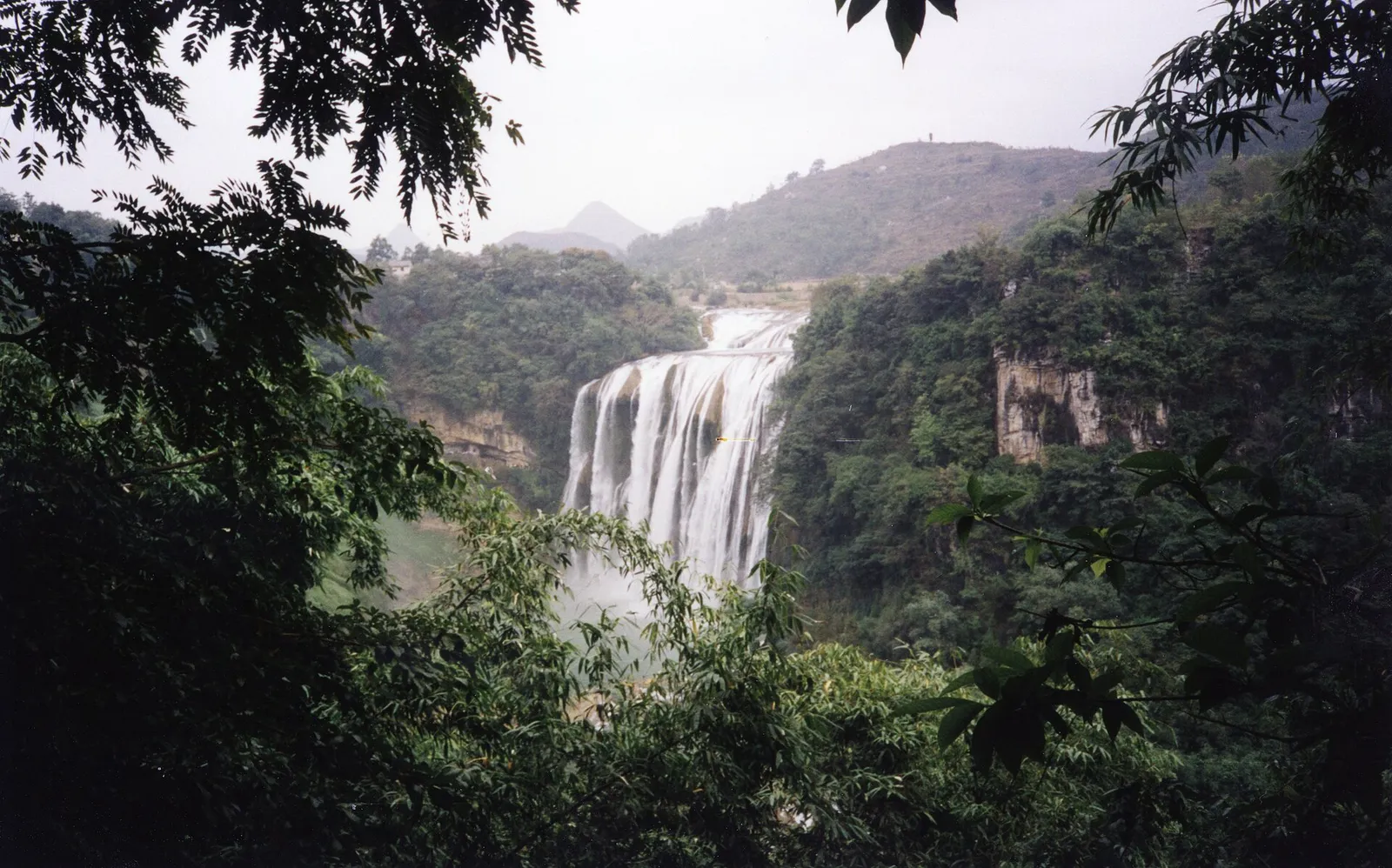
| D9 | Huangguoshu, or the caves and climbing at Getu River; pick one | Anshun |
| D10 | Anshun to Guiyang, fly out of Longdongbao | — |
D3 and D7 are transfer days with nothing scheduled, and they are not wasted. Bungee and via ferrata both need sleep and a steady head. Six hours on the road followed by a bridge the next morning makes your reactions late.
Tianmen Mountain on D6 is a buffer. It is milder than the days before it, but the cable car, the mountain road and the glass walkway let you come down from consecutive heights, and you get a different kind of mountain from Wulingyuan.
Getting between the three clusters
| Leg | Option | Time | Reference fare (2026) |
| Guangzhou South to Qingyuan | High-speed rail | 25 minutes | about CNY 30 second class |
| Qingyuan to Zhangjiajie | Car to Baiyun Airport plus flight | about 5 hours door to door | CNY 500–900 per person |
| Guangzhou South to Zhangjiajie West | direct high-speed train | 5 h 28 min to 5 h 58 min | CNY 511–678 second class |
| Zhangjiajie West to Guiyang North | direct high-speed train | 3 to 3.5 hours | about CNY 300 second class |
| Guiyang North to Anshun West | High-speed rail | about 30 minutes | about CNY 50 |
| Anshun to Balinghe and Huajiang | Private car | 1 to 1.5 hours each way | CNY 700–1000 per day |
The Qingyuan to Zhangjiajie leg is the only real decision on this route. A direct train takes five and a half hours, which sounds fine until you count the run back to Guangzhou South and the wait, which pushes it past seven. Flying, including the drive to the airport, check-in and the transfer into town, takes about five hours. It costs three or four hundred yuan more and buys two hours. With gear and a tight schedule, fly.
The other direction is easier. Three train legs from Zhangjiajie to Anshun add up to just over four hours, cheaper and less fuss than flying to Guiyang and changing.
How do you book the bungee and via ferrata, and what limits apply?
Three operators, three rulebooks, and no single platform that sells all of them. Confirm every number below with the operator before you go.
Zhangjiajie Grand Canyon: 260 metres off a glass bridge
The platform sits mid-span, with a drop of about 260 metres and five or six seconds of free fall. It has run since December 2020 and is operated by Bungy China, one of the few commercial bungees in China with international certification behind it.
The jump is priced separately from the park ticket, close to CNY 2,000 for one jump, with a discount for a second jump the same day. The glass bridge itself requires a real-name reservation and caps daily numbers, so holiday slots sell out days ahead. High wind, heavy rain or snow closes it, with a ticket refund and no compensation.
Public listings disagree on age and weight: either 13 or 16 as the minimum age, and a ceiling of 90 or 105 kilograms. That usually means the operator decides on the day. Do not plan around a number you read online; have your local operator confirm in writing when booking.
Qixing Mountain: a 168-metre ladder you climb, not jump
Qixing Mountain sits in Tianmenshan town, Yongding district. It is a separate mountain from Tianmen Mountain, and the two get confused constantly. The main via ferrata is about 1,200 metres in four sections: an easy wall to warm up, a wire bridge, a big cliff traverse, and the ladder. The ladder is 168 metres at 51 degrees, close to vertical, and the full route takes about three hours.
You wear two lanyards, one primary and one backup, clipped to a 12 mm cable, and you cannot unclip mid-route. The via ferrata is ticketed separately, from about CNY 350, on top of entry and the cable car.
No climbing background is needed. A fear of heights is disqualifying. Once you are on the ladder, going back is harder than going up, and there are people behind you, which is the worst place to freeze. If your arms are weak or your weight is high, do the first half only.
Anshun to Guanling: two bridges, two different numbers
The Balinghe Bridge runs 2,237 metres, with a 1,088-metre main span and a deck 370 metres above the valley floor. It has a bungee, a high swing and a controlled descent, plus a lift down into the bridge’s internal walkway. The 370-metre jump holds a Guinness record as the highest commercial bungee, awarded before the Huajiang bridge opened.
The Huajiang Canyon Bridge opened on 28 September 2025, with the deck 625 metres above the river. Second-level sightseeing tickets cost CNY 99, capped at 6,000 a day. On the bridge, a rope bungee costs CNY 2,999, a swing CNY 1,680, and the speed run, step-and-fear walk and high wire CNY 128 each. These are 2026 public prices and they change.
The two numbers do not compare. 625 metres is deck to river; 370 metres is deck to valley floor. What you actually feel is the free fall from platform to brake, and both are a matter of seconds. The height in the marketing belongs to the engineering, not to you.
Can you jump three times in 10 days?
No, and there is no reason to try.
Two jumps in one day degrade your body position and landing judgement on the second, on top of a second load through the neck and lower back. Operators generally ask for 48 hours between jumps. Anyone with cervical or lumbar disc problems, high myopia, high blood pressure or a heart condition should sit this out, regardless of weight.
In a ten-day trip, one jump in Zhangjiajie and one in Anshun is the ceiling. Swap the third for the swing or a viewing ticket: the experience barely changes and the risk drops.
Check insurance separately. Standard travel accident policies exclude bungee, climbing and high-altitude trekking. Buy a policy that names these activities before you leave, not at the gate.
Where to stay
In Qingyuan, stay in the city, half an hour from Gulongxia and with more choice than the park gate. In Zhangjiajie, stay in Yongding district: the Grand Canyon, Qixing Mountain and Tianmen Mountain are all within an hour, which beats Wulingyuan, at the cost of early starts. In Anshun, the city works for both bridges and Huangguoshu; Guanling county is closer to the bridges but has almost nothing above four-star.
The gap between four and five stars is small here, three to five hundred yuan a night. Location matters more. There are no proper hotels in the mountains, so basing in town and driving out each day beats hunting for something inside the scenic area.
Is October a good time, and is rafting still open?
October is one of the best months on this route. Hunan and Guizhou are dry with good visibility, the Zhangjiajie peaks layer up in autumn light, and temperatures sit between 15 and 25 degrees, so the via ferrata does not leave you dehydrated.
The trouble is at both ends. 1 to 7 October is the National Day holiday: the glass bridge, Tianmen Mountain and the Huajiang bridge all cap numbers and queue, and hotels add 30 to 50 percent. Avoid it if you can. Rafting is less certain. The season is advertised to the end of October, but operations usually wind down after the holiday as water levels and temperatures drop, so call the park on the day if you go mid-month.
Guizhou’s bridges shrug off rain but not wind. High-wind days shut the activities on the Huajiang bridge, and Balinghe too. The bridges are on D8 rather than the last day so there is one day of slack.
What foreign visitors should watch for
Tickets are where things jam. Most large parks now accept passport-based reservations, but some mini-programs still take only Chinese ID cards, which means the manual window and the same queue as everyone else. Some platforms also fail at payment. In high season, have your local operator book and hand you the confirmation and entry method, which beats testing your luck at the gate.
Train tickets need a 12306 account registered to your passport, and you clear the manual gate at the station. Big stations such as Zhangjiajie West and Guiyang North have English signage; small ones do not. Allow more than twenty minutes for any connection.
Link an international card before you arrive. WeChat Pay and Alipay both accept Visa and Mastercard, but stalls and shuttle ticket windows in parks may still want cash or a QR scan. A few hundred yuan in cash takes no space.
Put the driver’s English level in the confirmation. Drivers on this route know the roads and can get by with translation apps, but when a wind closure forces a same-day change of plan, the language gap turns directly into hours and money.
Drones are banned at the glass bridge, on the big bridges and inside the parks. Do not count on getting away with it.
What it costs
For three people over ten days, excluding international flights and most meals, the 2026 order of magnitude looks like this.
| Item | Total for 3 |
| Four-star hotels, 9 nights, 2 rooms | CNY 9,000–16,000 |
| Upgrade to five-star | CNY 18,000–30,000 |
| Private car and transfers | CNY 8,000–12,000 |
| Trains and one flight | CNY 4,000–6,000 |
| Tickets and adventure activities | CNY 12,000–20,000 |
| English-speaking guide, per day | CNY 6,000–10,000 |
The four-star version lands between 40,000 and 60,000 yuan; five-star runs 60,000 to 100,000. The biggest swing is not the hotel but the activities: one jump or two, a helicopter or not, can move the total by more than 10,000.
The point of this route is not saving money. It is fitting the hardest activities in three regions into ten days without breaking. If you will pay to avoid friction, it is worth it. If you want to see more provinces on the same budget, it will feel expensive.
Ten days in, you will remember three things: the five seconds looking down from the bridge, the minutes on the ladder when your arms shake, and discovering that the wind on a 600-metre deck is stronger than you expected. None of that photographs, and none of it fits twice in one day.
If you are planning a trip like this, tell us how many people, your dates, who can jump and how many times, and we can settle the route and the bookings together. Start here: our contact page. If it is your first trip to China and you have not picked an arrival city, read which Chinese cities to visit first; for arriving in Shenzhen or Guangzhou, see first time in Shenzhen.
Last updated: 3 November 2026