
Make butter tea with a Tibetan mother, embroider beside Miao women, fish with a boat crew or pick tea with a farmer. 0765trip's Closer Moment days are built so you spend the day with people, not just look at them.
What is the end point of a trip? Ticking off every sight, or filling a nine-square photo grid? One line has sat in my saved folder for years: the best way to see a place is to live one ordinary day there, like a local.
So this time I booked nothing. I only wanted one plain day in Chaozhou with someone who actually lives there.
Morning tea with Ah-Beh
It was five in the morning and still dark when I met the man of the day outside the old city gate. Ah-Beh is sixty-three, born in Chaozhou, and worked in a tea factory before he retired. He arrived on a polished old bicycle with two bamboo baskets lashed to the rack: come on, let's get you some morning tea first.
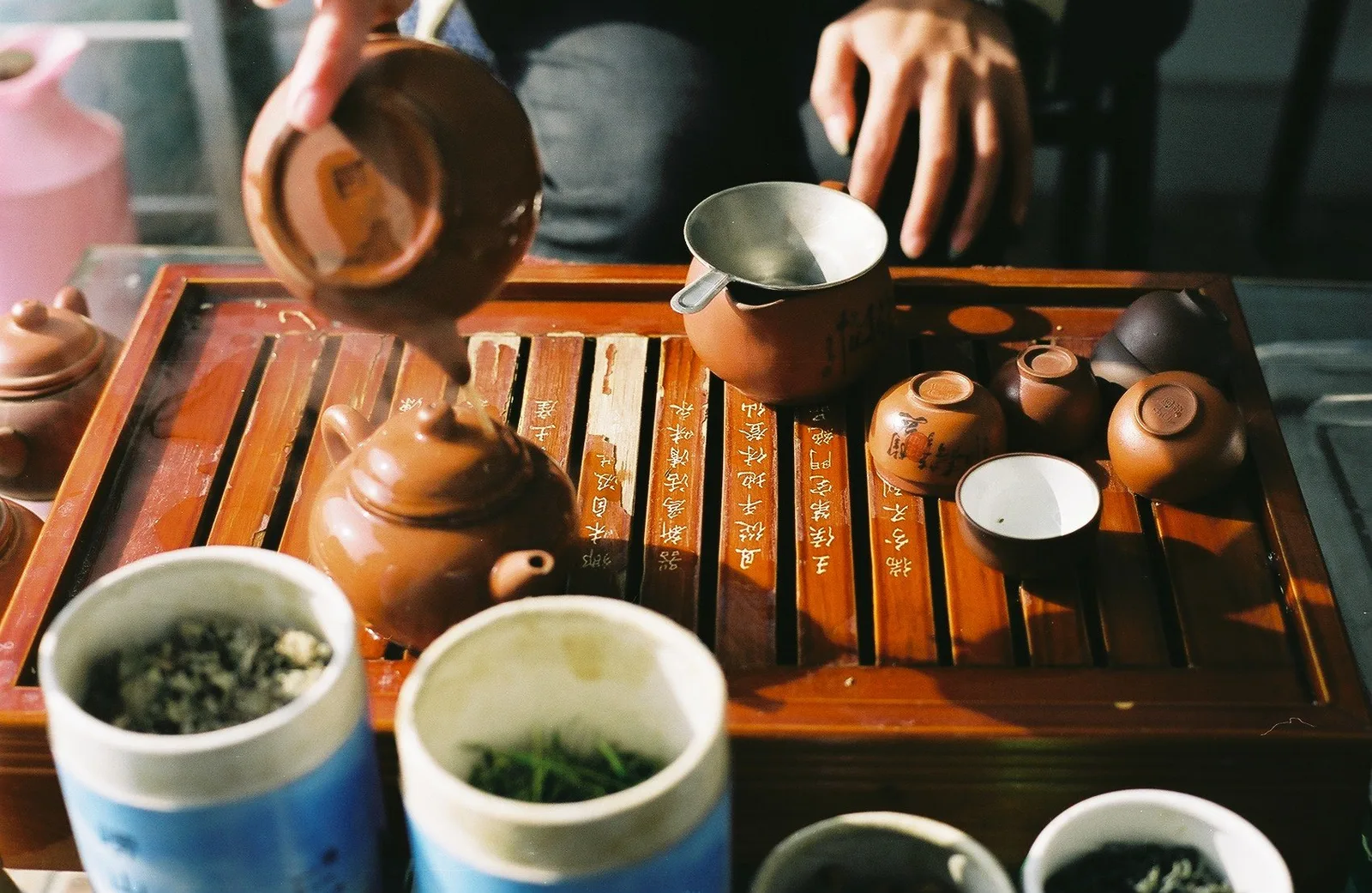
In Chaozhou, morning tea is not served in a teahouse. It happens at a roadside stall: one low table, a few bamboo stools, a pot of Phoenix Dancong, freshly steamed rice noodles and rice rolls. Ah-Beh rinsed the cups, brewed, poured away the first infusion, then handed me a cup: smell it first, then drink.
I sipped the way everyone around me did, in small mouthfuls. The tea was scalding and the finish stayed sweet. Ah-Beh squinted and smiled: a Chaozhou person goes a day without tea and feels wrong all over. That was the moment I understood that fitting in takes no technique at all — a cup of tea with a local is enough.
A wet market is the best museum
After tea, Ah-Beh took me to the morning market. If you want to see a city's real face, he said, go to its market.
Ximen market was loud with voices: a beef-ball maker pounding paste in a steady rhythm; a fish seller haggling in Teochew so fast it sounded like a machine gun; greens — kale, mustard, bok choy — lined up glistening on a stall. Ah-Beh introduced each one: this is Puning bean paste, you must add a little when you fry water spinach; this is galangal, the soul of braised goose.
The beef-ball stall surprised me most. Real Chaozhou beef balls, he said, are pounded by hand with a two-jin iron rod for forty minutes until the paste turns springy. He let me try. A dozen strokes and my arm would not lift.
"So you see," he said, patting my shoulder, "every single ball in there is work."

An afternoon of gongfu tea
Lunch was at an old shop he chose: a bowl of rice-noodle soup and a plate of satay beef. Plain food, so fresh I wanted to lick the bowl.
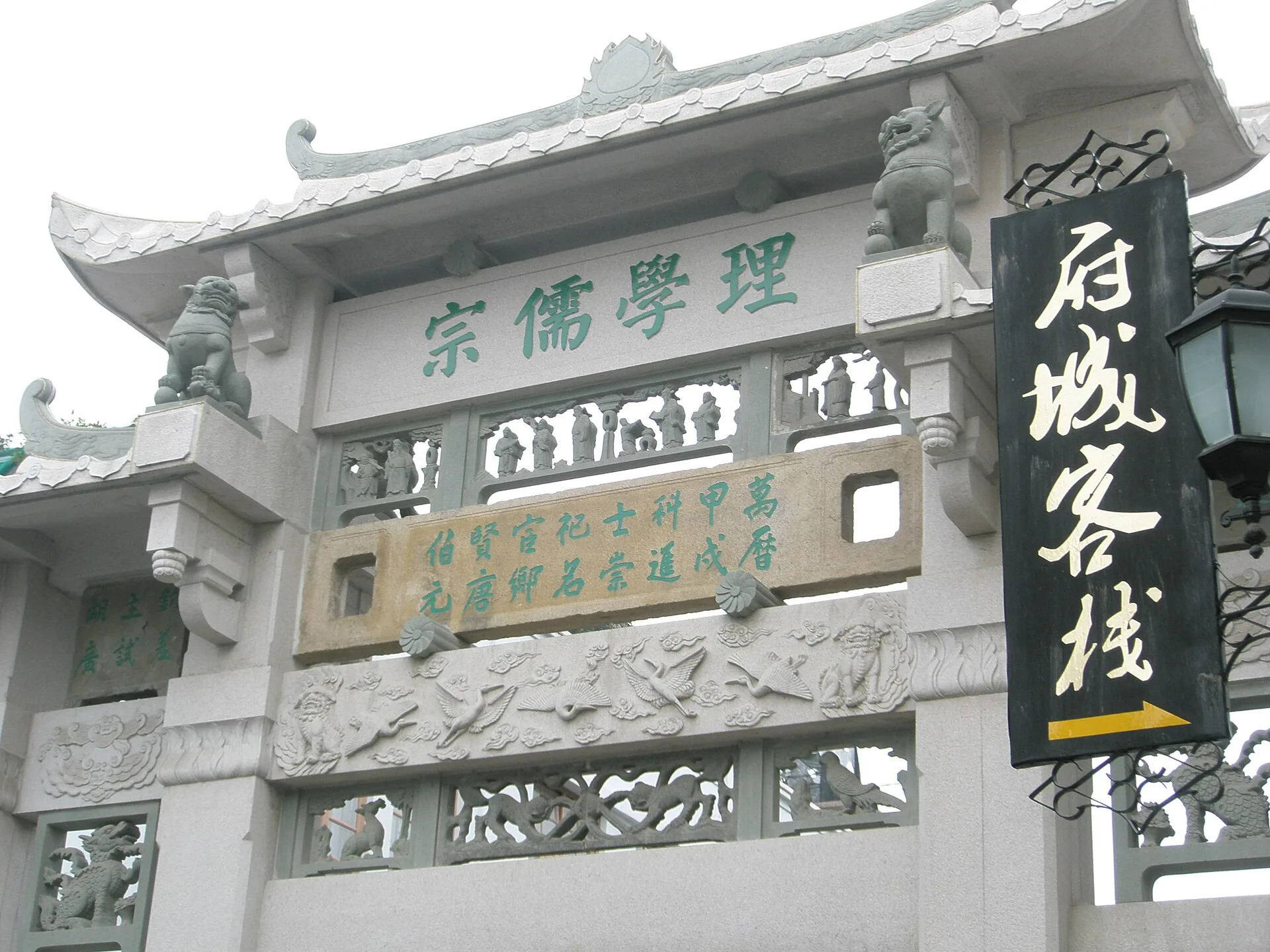
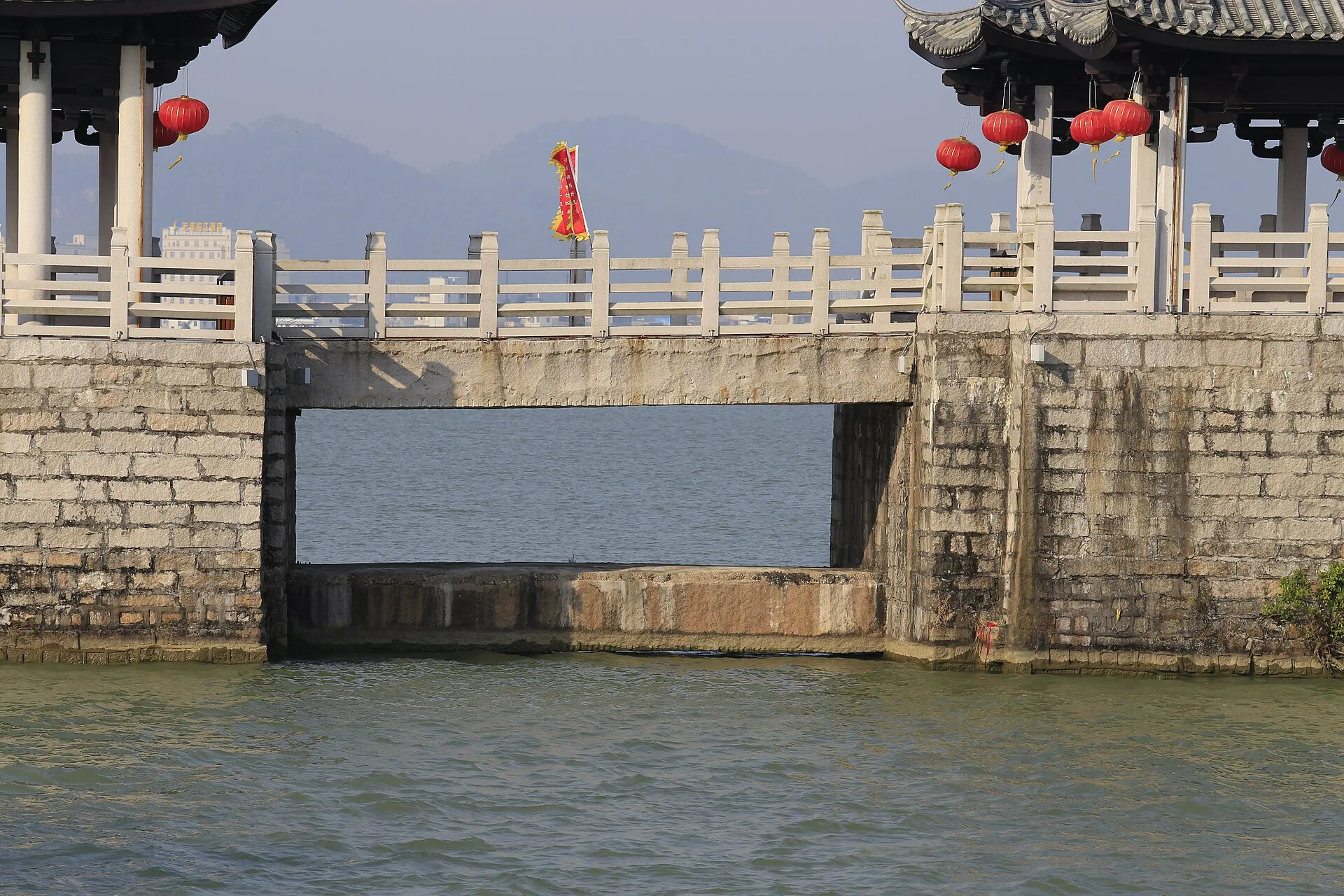
In the afternoon he took me back to his house. In the small courtyard he set up the tea table and told me Chaozhou stories while he brewed: how Guangji Bridge changed from a chain of eighteen boats into what it is today, what stands behind each archway on Paifang Street, and why gongfu tea uses only three cups for a whole circle of people.
Three cups, passed around. This is called Lord Guan inspecting the city and Han Xin counting his troops, he said. The tea has to be even, and so do people — this cup belongs to everyone.
Holding that warm cup, I felt oddly moved. In an age when everything speeds up, someone still gives up an afternoon to brew one pot properly and tell a stranger the old stories.
Before dark
At dusk he walked me onto Guangji Bridge to watch the sun go down over the Han River. That side is Qiaodong, he said, pointing. We used to swim across from here after school. Then he laughed at himself.
As we said goodbye I asked him: why spend a whole day with a stranger?
He thought about it. When I was young I travelled too, he said, and I know that what you want most on the road is a local who will take you home. Chaozhou people care about that. You come, you are a guest.
When to come to Chaozhou
Half of Chaozhou's charm is the weather. October to March is the comfortable window: you can walk all day without sweating, and both the morning market and the evening streets are pleasant. April and May turn muggy, July and August are air-conditioning afternoons, and around Spring Festival the old town is at its busiest — the tea stalls still open, but the neighbourhood feel thins out.
With only one day, start with morning tea, give the middle of the day to the market, brew tea in the afternoon and walk to the river at dusk. Shantou and Jieyang are about an hour away, so most people treat Chaozhou as one stop on a Chaoshan trip; routes and transport are covered inhow to get to Chaoshan and link the cities。
If you want a day like this
I did not buy a single ticket all day. Nor did I walk far: the old city gate, Ximen market, his courtyard and Guangji Bridge all sit within walking distance. What took the time was stopping — waiting for a kettle to boil, watching a pot of noodles come off the heat, hearing an old man tell the same story twice.
Looking back, a few things are worth writing down for anyone who wants to live one local day:
- Stay inside the old town. Chaozhou's sights cluster around the old city and Paifang Street. Stay close and you can get up at dawn; stay far and the best hours of the day go into the car.
- Give the morning to the market. A morning market is the least guarded hour of a city. Stallholders are busy, which is exactly why they will talk to you. Go empty-handed and curious; a checklist is less useful.
- Do not rush the schedule. I had planned market in the morning, Paifang Street in the afternoon, the bridge at night. Once there I realised an afternoon at the tea table was already the point of the day.
- Mandarin is enough. Ah-Beh's Mandarin carries a thick Chaozhou accent, but we talked without trouble. Haggling at the market happens in Teochew; not following it does not stop you enjoying the noise.
- Leave room for accidents. The best of the day was unplanned: two extra cups of tea, a sunset from the bridge, an elder willing to tell a stranger about his family.
Walking back to the hotel I scrolled through the photos. Not one is a standard tourist shot, and every one has warmth in it.
That, I think, is the travel I want: not going to see a place, but being held for a whole day by the people in it.
Traveller story · 0765trip