The most practical winter weekend around Chengdu is finding a hot spring and soaking for two or three hours. This sorts the options by drive time, explains private versus shared pools, and covers what to check with children or elders.
Destination: Sichuan
Chengdu winters are damp and short of sun, and the most comfortable weekend plan is often to drive an hour or two, soak until you are warm, and eat something hot. The trouble is that far too many places around the city call themselves hot springs, from genuine mineral water to heated tap water. One bad pick and the day is wasted.
This piece groups options by drive time, then explains private versus shared pools and what to watch with children and elders. Tibetan hot springs up on the plateau are a different subject, seehot springs in western Sichuan; this article covers only what you can reach from Chengdu in a day or with one overnight.
Within an hour: city and near suburbs, good after work
What you reach inside an hour is mostly city and near-suburb bathhouses and hotel pools. The advantage is no planning: soak and go home. The drawback: small pools, crowds, and private pools that usually need booking.
This tier suits three groups: people who want to unwind on a weekday evening, parents who do not want a long drive, and visitors with only half a day. When choosing, do not stop at the word hot spring; ask whether there is a real natural outlet, whether water temperature is stable, and how often shared pools are changed.
Two hours: Qingcheng Mountain and Dujiangyan, the main tier
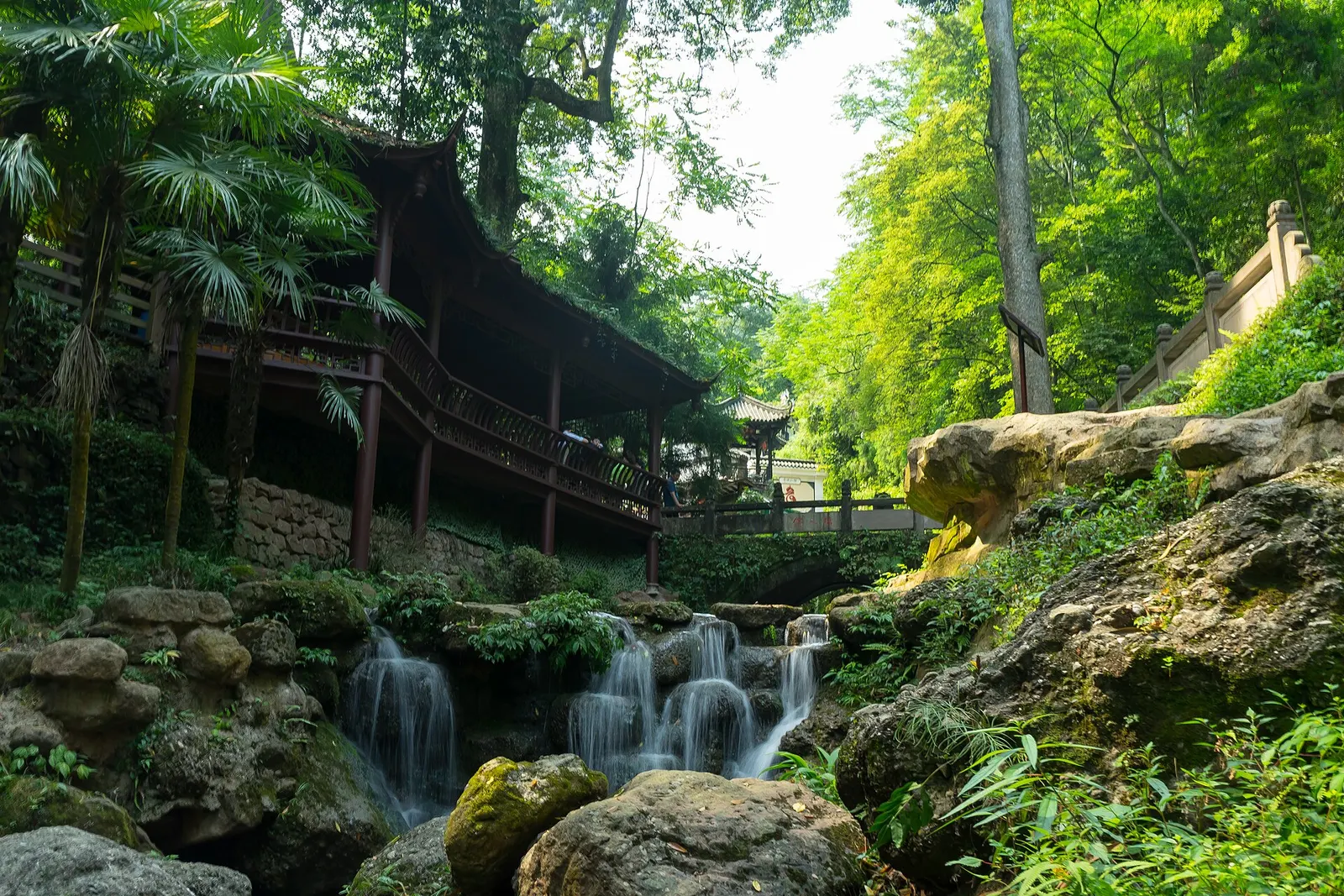
Heading west, the Qingcheng Mountain and Dujiangyan line is where Chengdu hot springs concentrate. Several resort hotels with pools sit at the foot of the mountains, an hour and a half from the city, good either as a day trip or as an overnight that also covers Qingcheng, Dujiangyan and Jiezi old town.
The strength of this tier is combination: hike or wander a town in the morning, soak in the afternoon, sleep at the foot of the mountain, drive back without rushing. Families with elders mostly choose here, because the drive is short, altitude is low, and food and medical facilities are close.
One warning: quality varies enormously along this line. The test is plain. Ask about water source and outlet temperature. Genuine springs have a stable natural source and mineral analysis; heated operations talk only about pools and never about source.
Two to three hours: Huashuiwan and Xiling, for an overnight
Further west, the Huashuiwan area of Dayi is another established hot spring zone, close to Xiling Snow Mountain. In winter this makes a two-day ski-and-soak trip: Xiling by day, Huashuiwan at night, back to the city the next day. Weekend traffic on this road is heavy in snow season, so leave earlier.
This tier suits people who want a real sense of leaving the city. The drawbacks are clear: weekend rooms are tight, prices rise, and food options are fewer than at Qingcheng. With a small child, check the distance from room to pool and whether the route is indoors; carrying a child across an open courtyard in winter is a genuine hassle.
Private pool or shared? Choose by company
The point of a private pool is not luxury. It is not sharing water with strangers. With an infant, with elders who dislike public bathhouses, or simply when you do not want crowds, a private pool removes the psychological cost.
Shared pools offer variety of temperature and space: rotate through different pools, then lie down in the rest area. A private pool cannot reproduce that. With a group, shared pools are usually better value.
A practical rule: with four or more people, booking one room with a private pool often costs less than four shared-pool tickets plus a meal, and you dodge the crowds. For a couple on a weekend, shared pool plus dinner is easier.
What to confirm before you soak
First, water source and outlet. A real spring has a stable natural source; heated operations only mention pools.
Second, water changes and circulation. Shared pools should post their schedule; for private pools, ask whether water is changed each time.
Third, meals. Most springs sit in the hills where nearby dining is inconvenient, so breakfast or one included meal saves trouble.
Fourth, cancellation rules. Winter weekend rooms are usually non-refundable, so do not book the tightest option if your plans are uncertain.
Fifth, transport and parking. Resort car parks at the foot of the mountains often fall short at weekends; ask whether a space is reserved.
What else can you pair with a soak
A hot spring alone cannot fill two days. The western line works because it combines naturally with other plans.
Qingcheng direction: walk part of the front or back mountain in the morning, soak in the afternoon, sleep at the foot, see Dujiangyan the next day and return in the afternoon. Elders with average fitness take the front-mountain cable car; only younger travellers attempt the full back mountain.
Huashuiwan direction: in snow season, pair it with Xiling Snow Mountain over two days. Ski by day, soak at night is the most polished version of this line. For choosing a ski field and renting gear, seeskiing in southwest China。
The old towns around Jiezi and Anren fill odd hours; two hours before or after a soak is enough, and do not stretch the drive just to add a sight. With children, put indoor activities and the soak on the same day and keep outdoor time under two hours, which beats three stops in one day.
One option people forget:soak without staying over. Take half a day off on a weekday, leave after lunch, return in the evening. Lowest cost, no loss of experience, since comfort depends far more on how crowded it is than on whether you sleep there.
Frequently Asked Questions
Do you catch cold more easily after a winter soak? Not while soaking, but the ten minutes afterwards are the risky part. Dry off, dress, and do not linger outdoors, especially with children.
How long should you soak? Fifteen to twenty minutes at a time, getting out to rest and drink water between rounds, two or three rounds a day. Come out if you feel dizzy or your heart races.
Are there places near Chengdu where you can soak without staying? Yes. City and near-suburb bathhouses charge per visit and suit a few hours. They are busiest on weekend afternoons and quietest on weekday mornings.
How does this differ from plateau hot springs in western Sichuan? The Tibetan springs in western Sichuan sit at 2,000 to 3,000 m, where soaking is part of a highland itinerary and transport plus acclimatisation matter more. Near-suburb springs are short leisure trips. Do not mix the two in one plan.
When is the best time to go? December to February is peak: most people, highest prices. March and November are comfortable shoulder months with similar water and far fewer people.